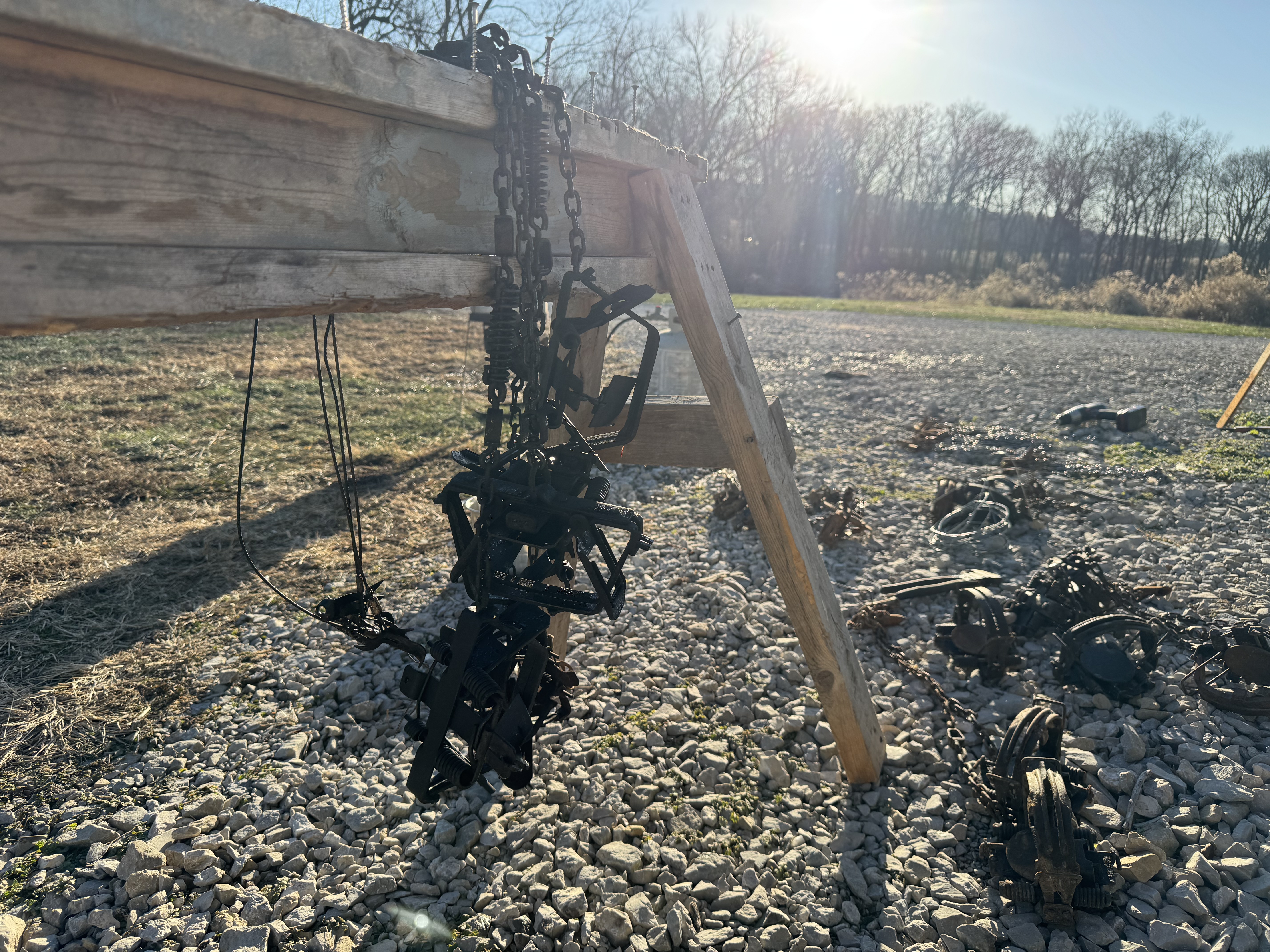
With trapping season underway, many trappers know the unofficial season starts in late summer when I inventory my traps, inspect them, and get them ready for opening day.
That’s also when I decide if I need additional traps. I keep most of my traps in good shape, so buying new ones isn’t frequent. But when I do, new traps need special attention.
Traps are made of steel — bent, shaped, drilled, welded, and riveted at the factory — and each finished trap is dunked in oil to prevent rust during shipping or while waiting to be sold. This oil is messy, smelly, and not very durable once traps are in the field.
Cleaning New Traps Before Use
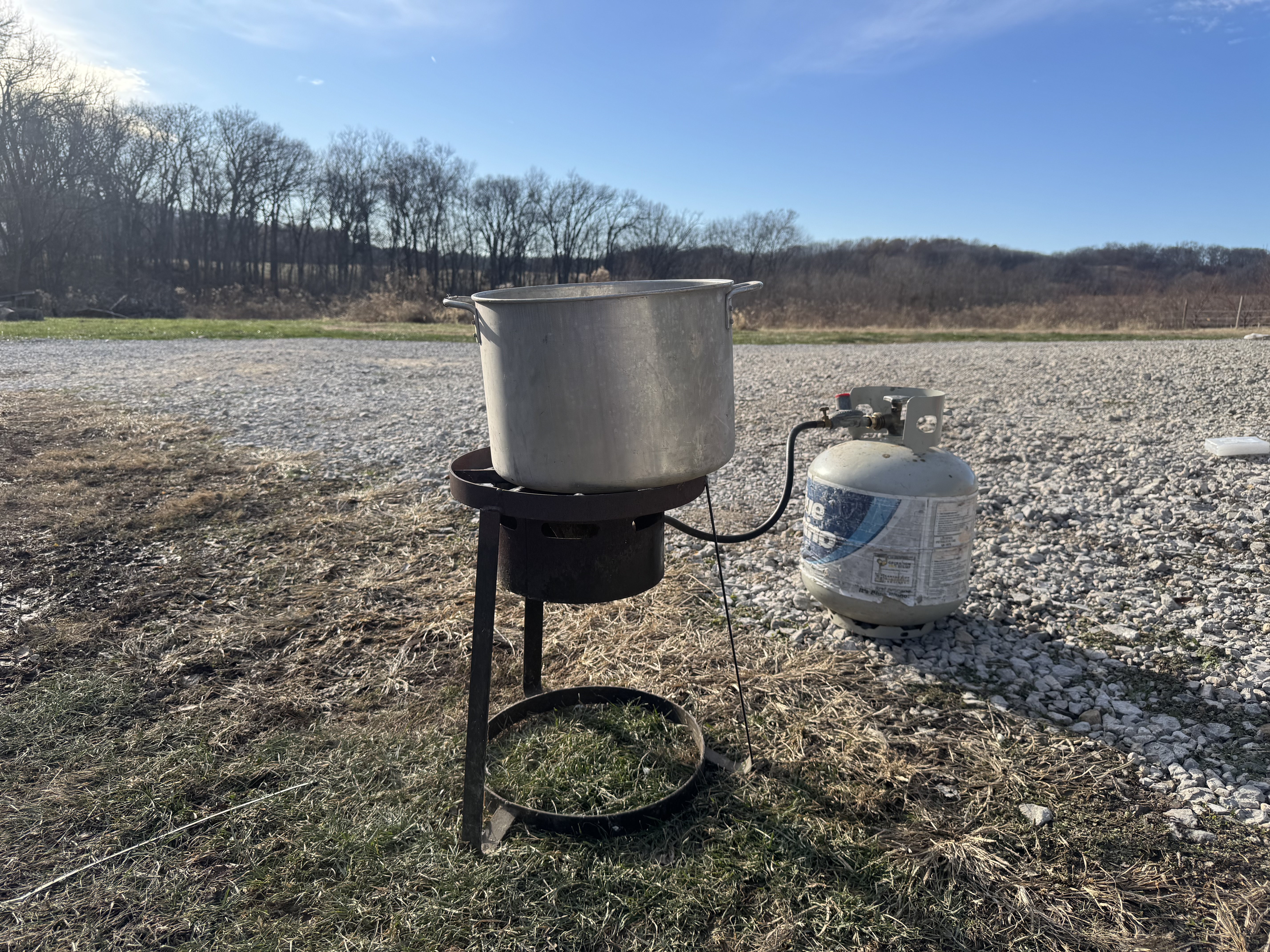
Job one on new traps is to remove the rustproofing oil. Soak them in a strong solution of unscented dishwasher detergent. Use about twice the normal amount of powder per five-gallon bucket of water, or the “juice” from two dishwasher pods. Swirl until dissolved, then add the traps. After soaking several hours or overnight, rinse them off. Once cleaned, the traps are ready to be colored and rustproofed with a more durable treatment.
Natural Rustproofing: Dyeing Your Traps
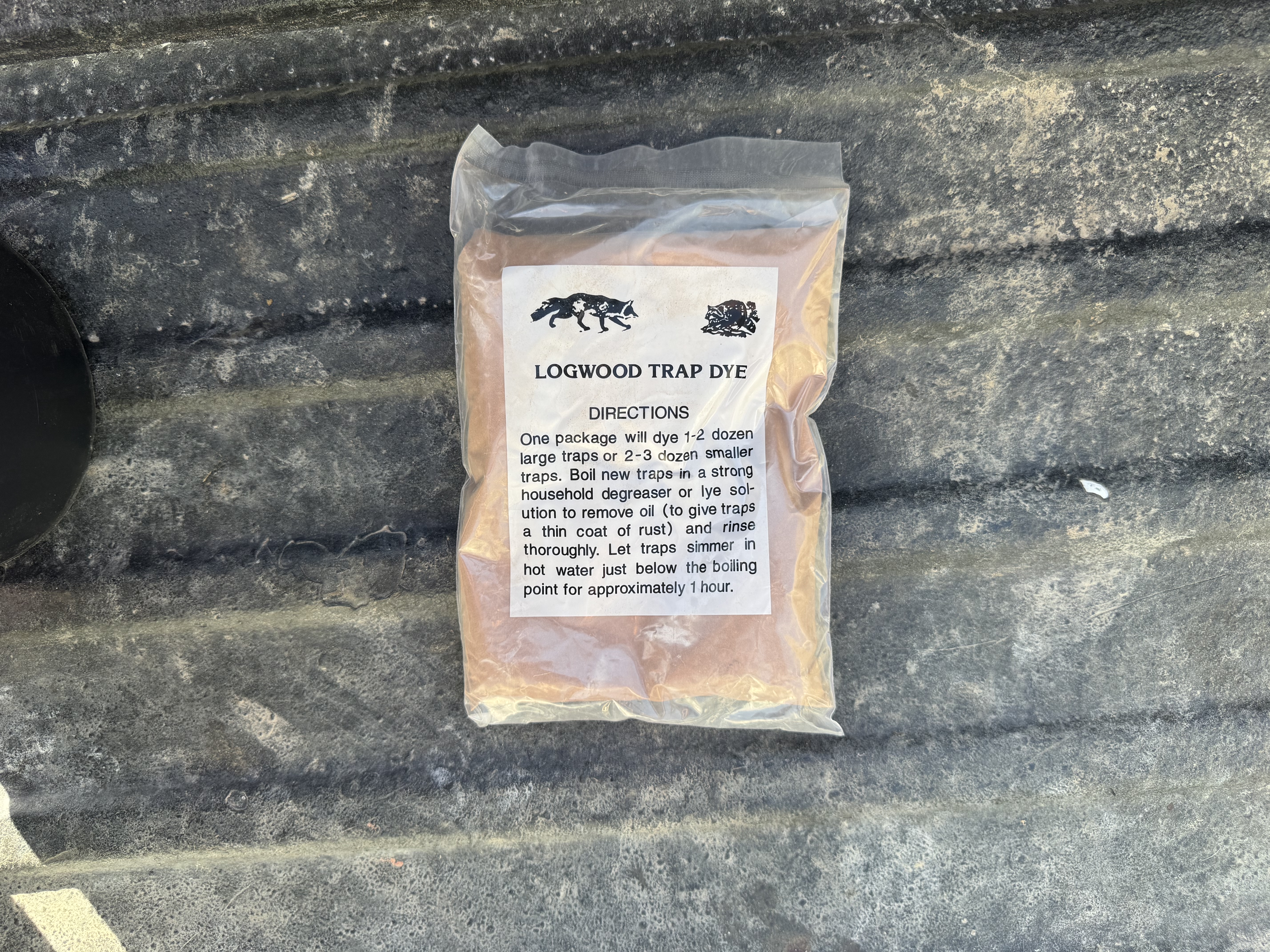
The oldest technique is an age-old, two-step process. Boil traps in a hot “tea” made from natural products to stain the steel and slow rusting.
In areas with black walnut trees, collect the dark brown husks, place them in a large, water-filled metal container with the traps, and heat over a fire or outdoor cooker until boiling. The tannins in the walnut hulls etch into the steel, producing a deep brown color.
Other natural options include sumac berries or bark from maple or hickory. If none are available, most trapping supply outlets sell powdered logwood dye. Substitute logwood crystals for walnut hulls for a similar effect.
These natural dyes help retard rust, but a waterproof coating of beeswax or paraffin is recommended to fully protect the traps. Heat a large pot of water over a fire or outdoor cooker, melt beeswax or paraffin on the surface, and dip the traps through the wax for a thin waterproof coating.
One-Step Speed Dips for Quick Rustproofing
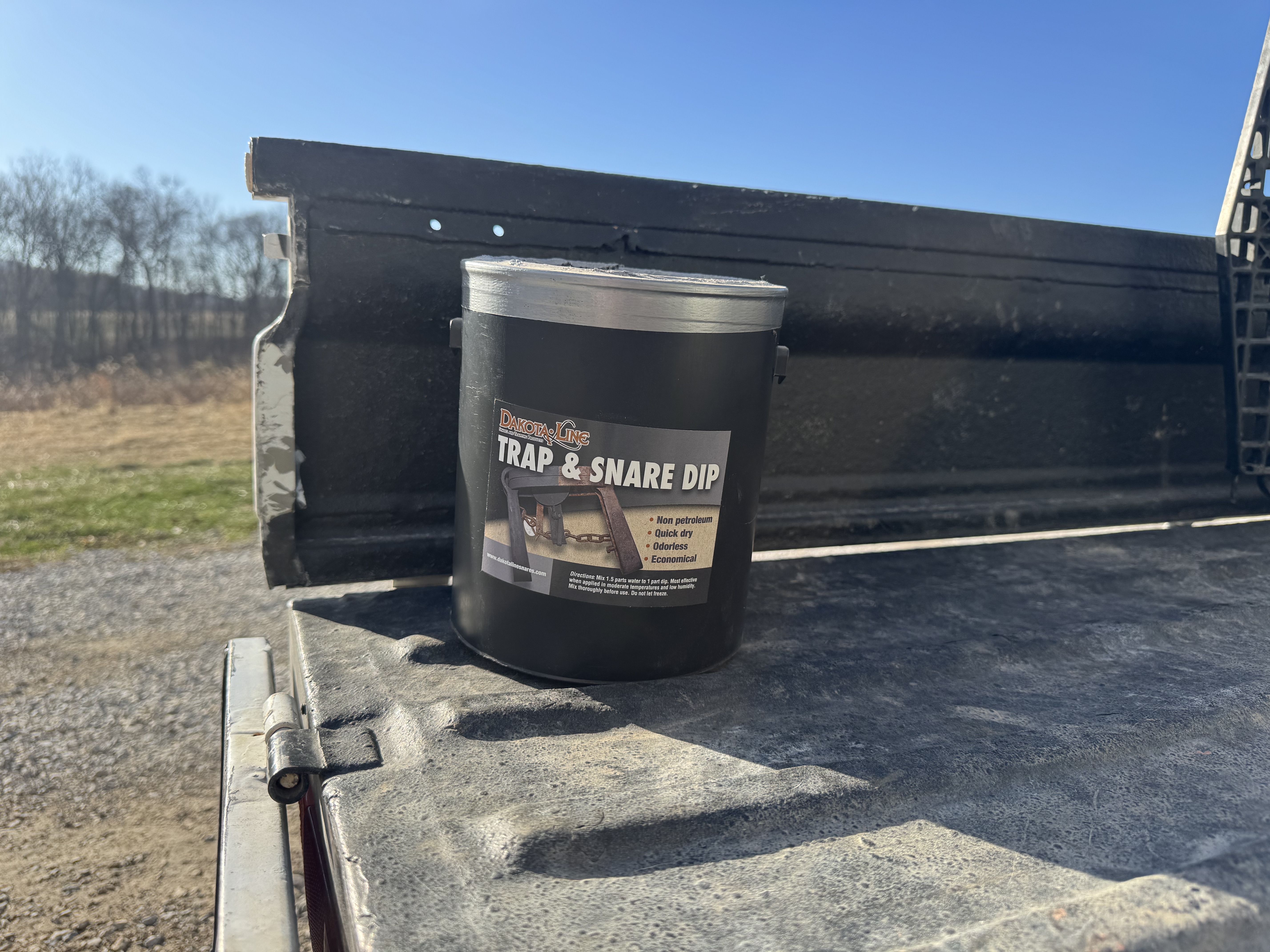
Several one-step coloring/rustproofing products, called speed dips, are available. Some are water-based; others are petroleum-based. Both types are sold as concentrates similar to thick paint. Dilute with water or lead-free gasoline, depending on the product. The dips form a chemical bond with the steel, producing a durable outer coating. Oil-based dips are typically black or brown; water-based dips can be black, brown, or white for snow conditions.
I now use either a water-based or gasoline-based dip, depending on where traps will be set. Petroleum-based dips are slightly more durable, but many trappers avoid them near foxes or coyotes, as residual odors could alert wary animals.
Some canine trappers use gasoline-thinned dips but apply them a month or more in advance and hang traps in a breezy area to let the smell fade. If a trapped animal rubs parts of the trap down to bare metal, I either re-dip the trap or set it aside for several weeks before reuse.
Protecting Dry-Land and Water Traps
For traps used in or near water for muskrat, raccoons, or beaver, oil-based speed dips last all season. For dry-land trapping, I use water-based speed dips. They dry odorless, and I keep a covered bucket with diluted dip in my shed for quick touch-ups.
Maintaining Traps for a Successful Season
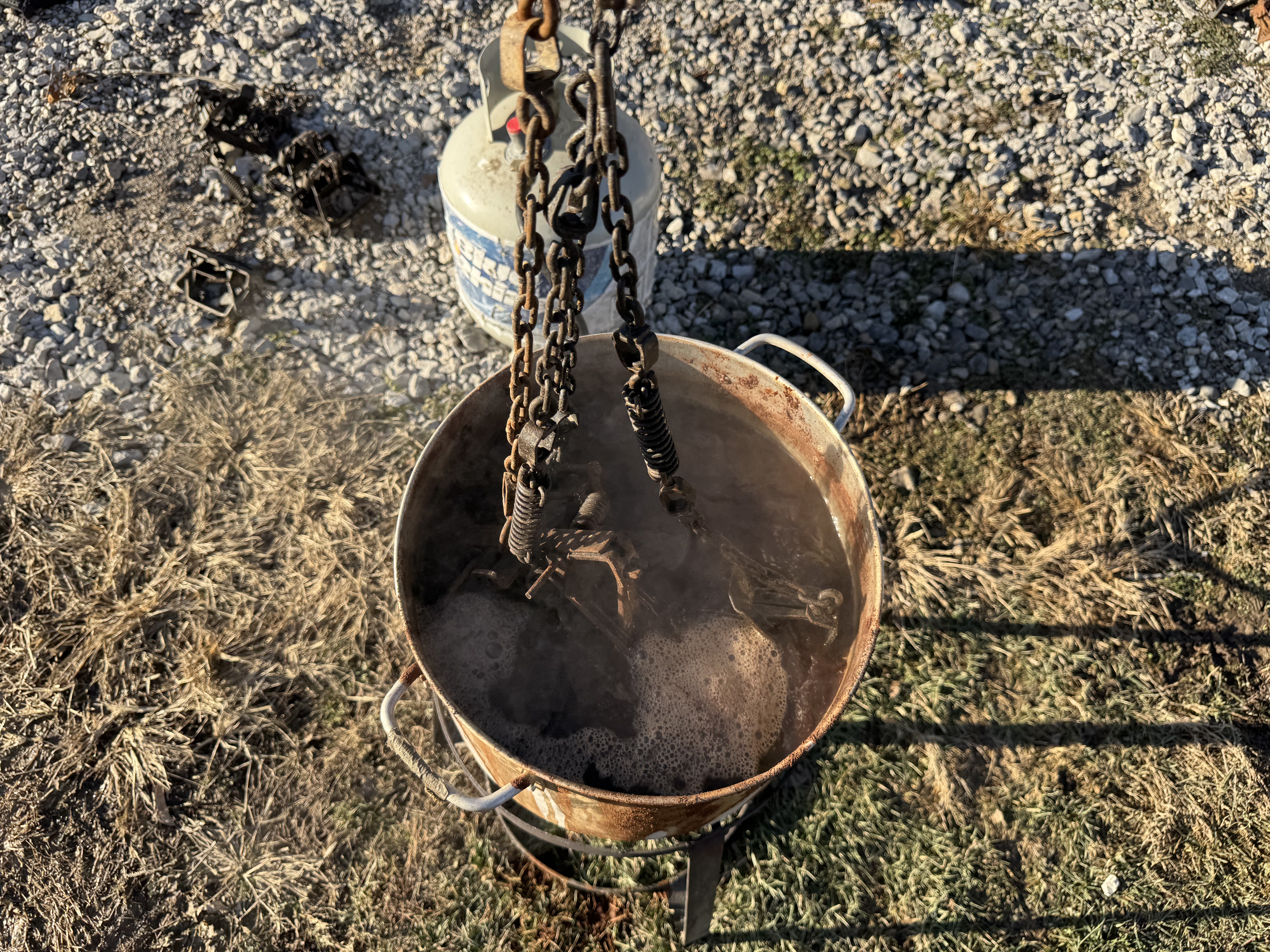
Traps that are properly cleaned, dyed, and waxed are ready to handle the rigors of trapping season. Maintaining traps with occasional re-dips ensures longevity and keeps them performing reliably, so trappers can focus on their sets instead of worrying about rust or visibility to wildlife.
Learn More From Your Trap Sets With SPYPOINT
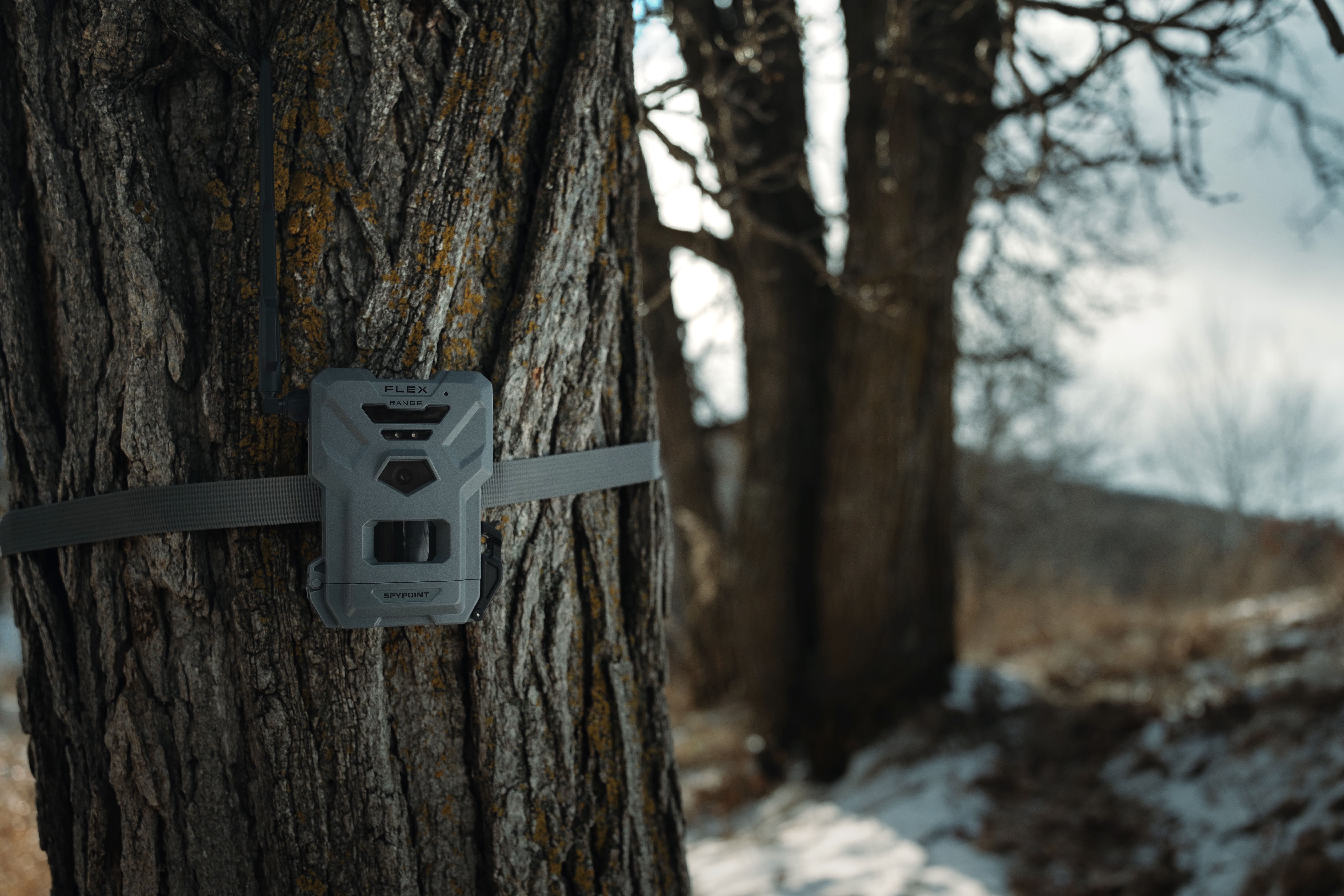
After your traps are prepped and ready, SPYPOINT cellular trail cameras can become a valuable learning tool. Positioning a camera near your sets lets you see how animals approach, investigate, or avoid them. Reviewing these photos and high-quality videos helps trappers fine-tune bait placement, trap positioning, and scent control to improve success rates. With SPYPOINT’s dependable image quality and app-based access, trappers can study animal behavior in detail and make better-informed adjustments for the rest of the season.
By Mike Schoonveld