Processing wild game at home is easier than many hunters think, and the best way to learn is by doing it. Books, videos, and YouTube help, but most of us learned by helping someone with experience, watching closely, and eventually picking up the knife ourselves.
There is a lot of satisfaction in turning an animal into clean steaks, roasts, burger, sausage, and specialty cuts for the freezer. It completes the hunt and gives hunters full control over the quality of meat they bring to the table. Whether you're processing venison, elk, moose, antelope, or bear, you also do not need a room full of expensive equipment to get started. A few key tools will make the job cleaner, safer, faster, and more enjoyable.
Boning Knife: The Foundation of Wild Game Processing
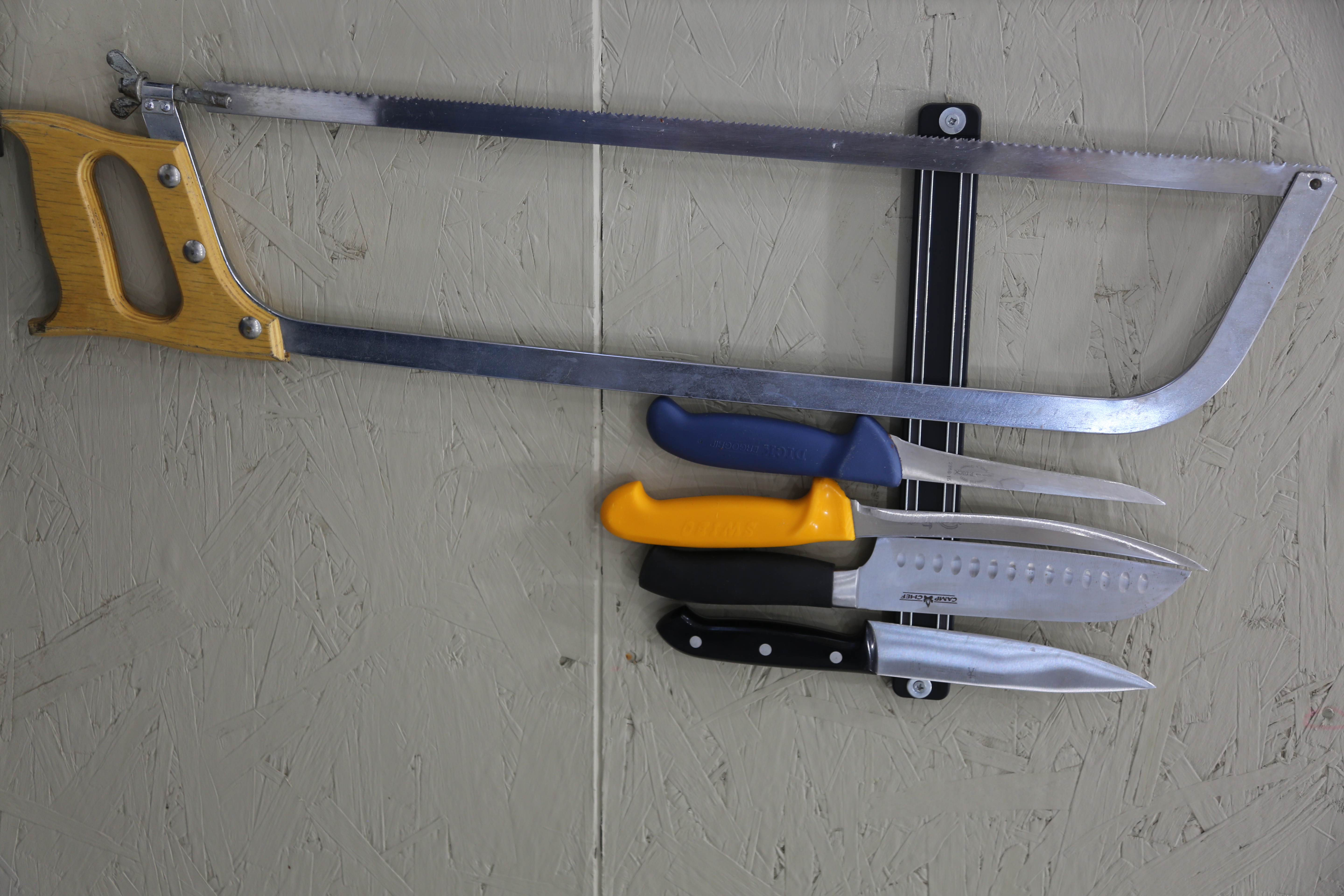
A quality boning knife is the first tool I want on the cutting table. Deer, elk, moose, antelope, and bears all break down easier when you have the right blade in your hand.
A fillet knife may look similar, but the blade is often too flexible for heavy work. Flexing a thin blade against bone can dull it quickly or even cause it to break. A proper boning knife has enough stiffness to follow bone, separate muscle groups, and remove meat cleanly without leaving much behind.
Blade style comes down to preference, but a drop-point blade and a curved edge are both useful. The drop point works well for backstraps and tenderloins, while a curved blade helps with long cuts around leg bones, neck meat, and larger muscle groups.
A sharp knife is also a safe knife. Keep a steel or sharpener close and use it often. Touching up the edge throughout the job keeps the blade cutting cleanly and reduces the chance of forcing a dull knife through meat.
Meat Grinder and Burger Bags for Venison and Wild Game
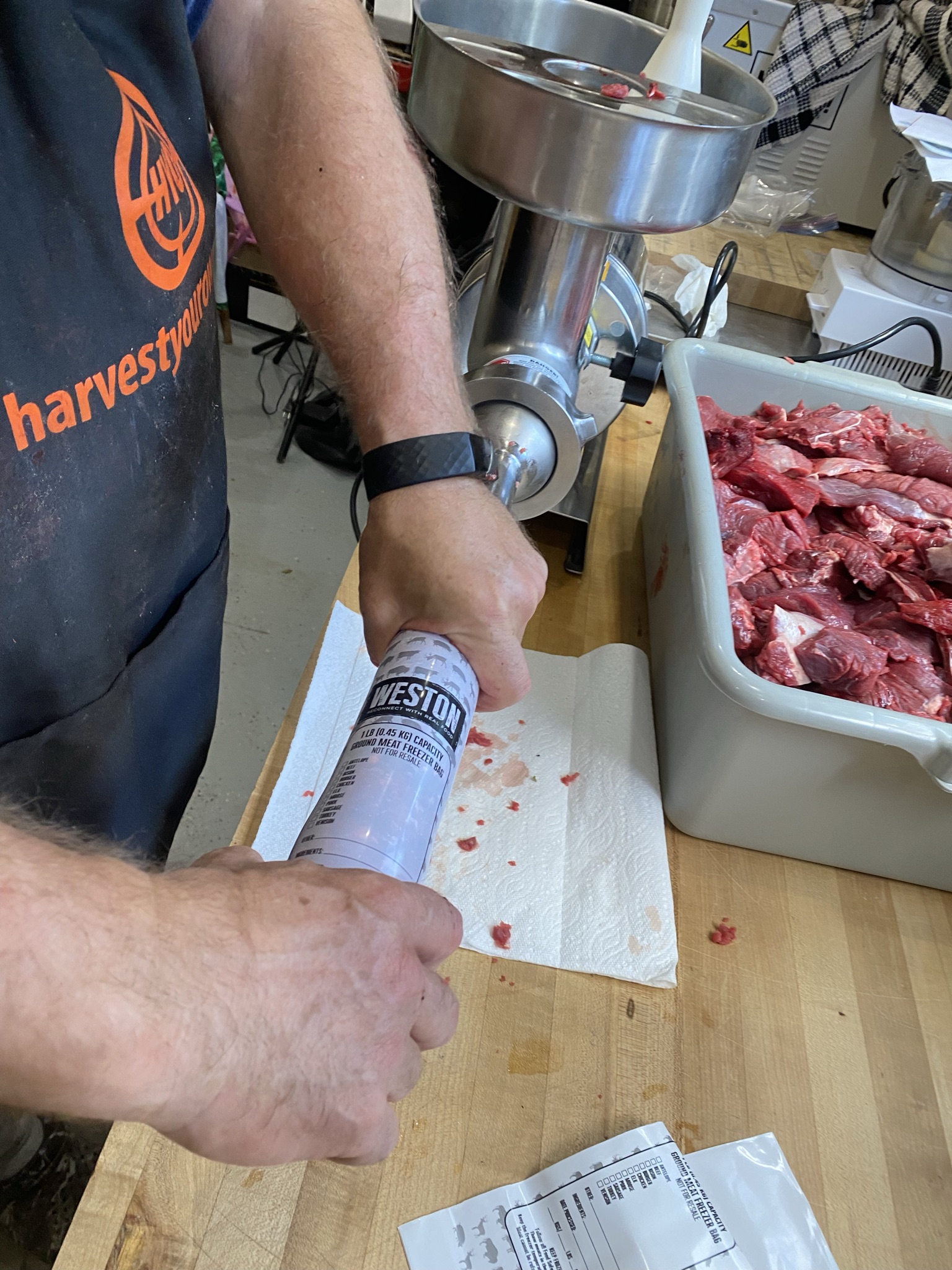
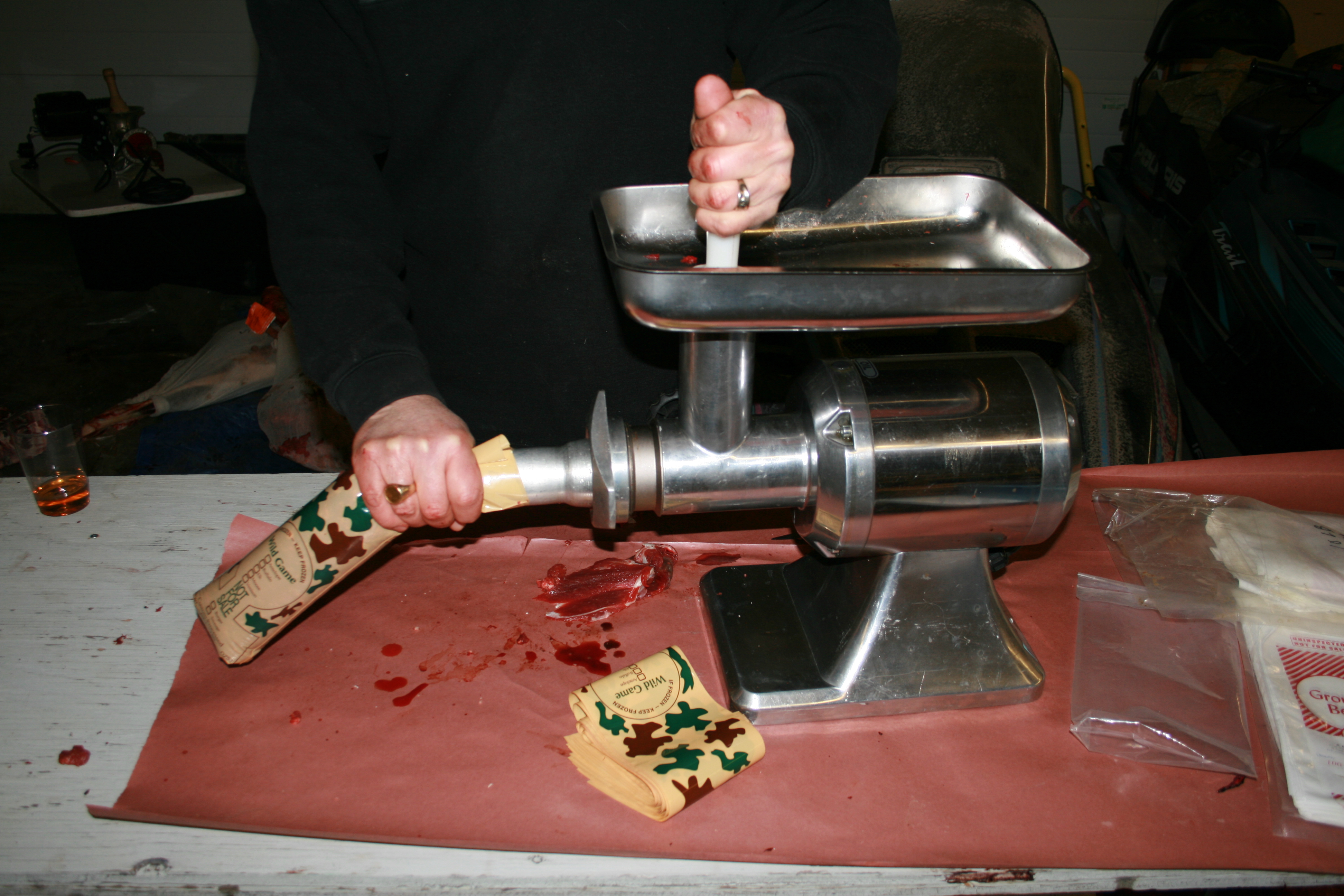
Every big game animal produces trim, and trim becomes burger, sausage, jerky, or stew meat. A grinder quickly becomes one of the most useful tools for a home butcher.
A good grinder saves money over time, especially for hunters who process several animals each year. Many butcher shops charge for cutting, trimming, grinding, and packaging. Owning a grinder lets you control the texture, cleanliness, fat ratio, and final product.
The cutting blade must stay sharp. A dull grinder blade smears meat instead of cutting it cleanly. That can leave gristle, silver skin, and tough pieces in the finished burger. Wild game is already lean and tender, so many hunters prefer a coarse grind for deer. Larger animals like moose and elk may benefit from a finer plate, depending on the cut and intended use.
A burger bag attachment is a simple upgrade that makes packaging ground meat easier. The tube fits on the grinder and fills freezer bags directly. With a little back pressure from your hand, the bags fill tightly with very little air space.
Freeze burger bags upright with the taped end facing up. Once frozen solid, they can be stacked or arranged however they fit best in the freezer.
Meat Tubs
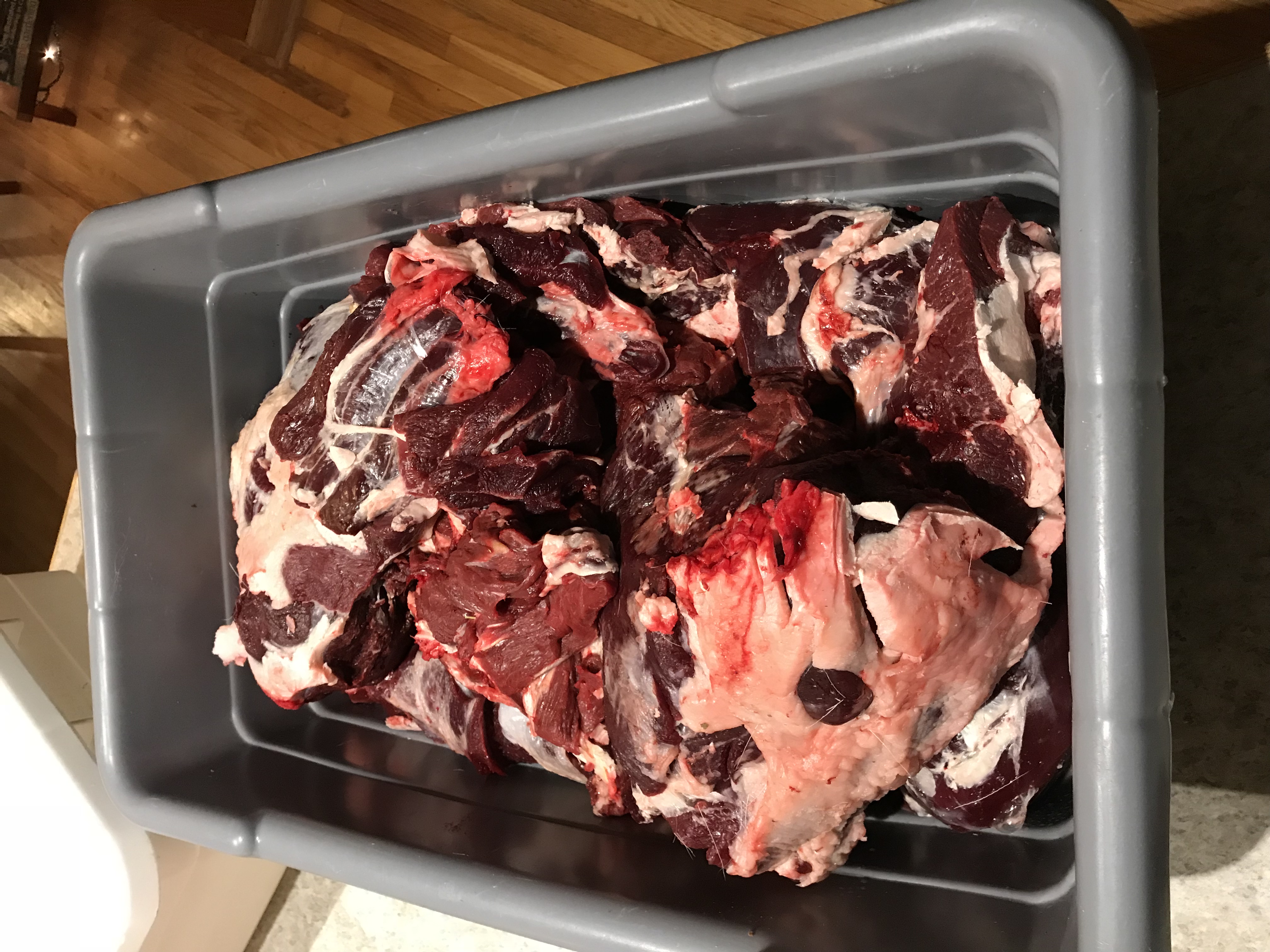
Food-grade meat tubs keep the job clean and organized. Most home butchers start with coolers, totes, pails, or whatever is handy, but proper meat tubs are easier to sanitize and are built for the job.
Use one tub for trim headed to the grinder and another for prime cuts waiting to be wrapped. If you make sausage, tubs become even more useful for mixing meat, spices, cure, and fat.
Good tubs are strong, easy to wash, and safe for food contact. Lids are a bonus when meat needs to be cooled, transported, or protected between steps. You can store your cutting gear in the tub between jobs.
Bone Saw
A bone saw is not required for every cut, but there are times when it opens the door to better meals.
Shanks are a perfect example. Many hunters either grind them or waste them because they are full of silver skin and connective tissue. Cut into one- to one-and-a-half-inch pieces, shanks become one of the best slow-braised meals on the animal. During cooking, the connective tissue breaks down into gelatin and collagen, leaving rich, tender meat.
A saw is also handy for ribs, chops, tomahawk steaks, and breaking larger carcass sections into manageable pieces. Home butchers can use a hand saw, but a reciprocating saw with a proper bone blade makes quick work of bigger animals.
Keep saw blades clean and avoid cutting through hair and hide whenever possible, as both dull teeth quickly.
Proper Packaging for Long-Term Wild Game Storage
Proper wrapping determines how good your wild game will taste months later. Air is the enemy of frozen meat. Any air pocket inside a package can lead to freezer burn.
Waxed butcher paper remains one of the best ways to protect wild game. For extra insurance, wrap steaks and roasts tightly in plastic wrap or Resinite, then cover them with butcher paper. The plastic layer helps squeeze out air and seal the meat surface, while the butcher paper protects it from light and frost.
Clear packaging can speed up freezer burn when meat is stored for long periods, which is one reason white burger bags and butcher paper work so well.
Take your time when wrapping. Tight corners, sealed edges, and solid tape make a big difference in freezer life.
Propane Torch
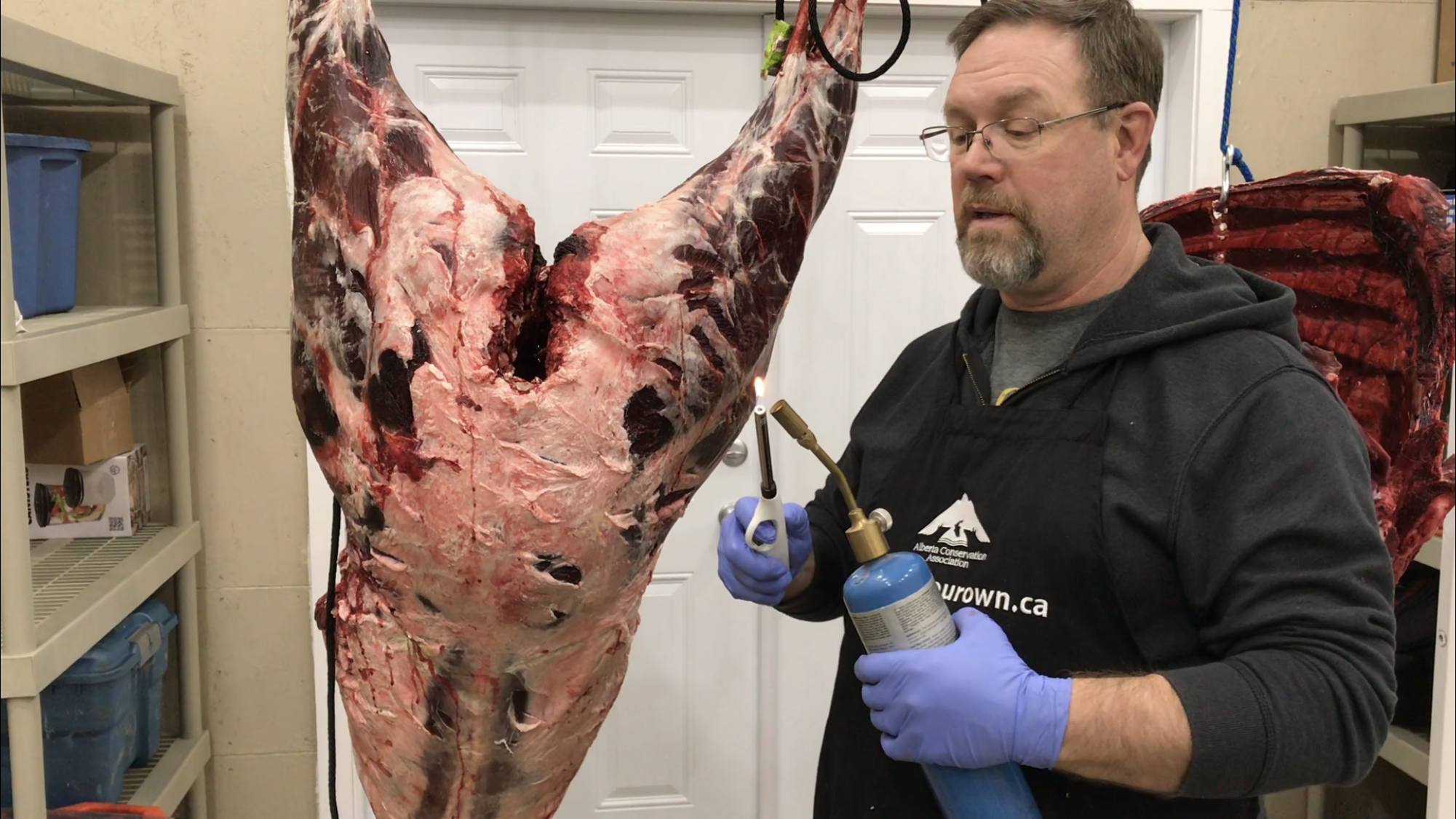
A propane torch might not be the first tool hunters think of, but it belongs in every home butcher setup.
Hair on wild game is one of the quickest ways to turn people off. No one wants to find hair on a steak, in a roast, or mixed into burger. After skinning, a quick pass with a propane torch will singe stray hair before cutting begins.
It does not smell great, but it works. Commercial processors use the same idea, and it is an easy way to keep meat clean. After singeing visible hair, wipe the area with a dry paper towel before trimming or cutting.
A stiff plastic brush is also useful after skinning. Once the carcass surface dries slightly, the brush removes loose hair from the meat. Plastic bristles can be washed and sanitized, making the brush easy to reuse.
Additions Worth Having
Once the basics are covered, a few extra tools make home processing even better. A sturdy cutting table, freezer tape, permanent markers, game bags, disposable gloves, cutting boards, scale, vacuum sealer, sausage stuffer, and meat thermometer all earn their place over time.
You do not need everything at once. Start with the essentials and add equipment as your skills grow.
You Don't Need a Commercial Butcher Shop
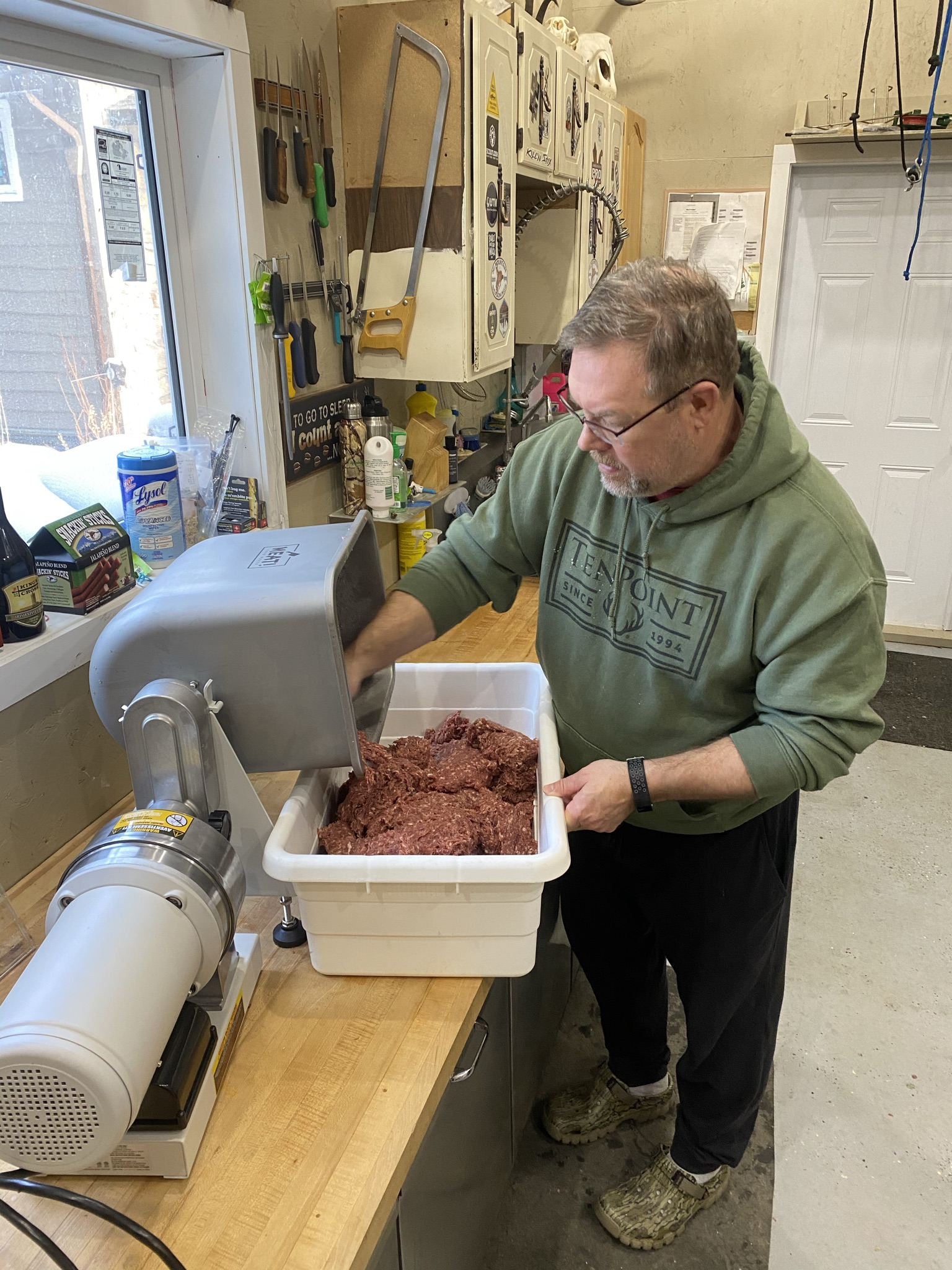
One of the biggest misconceptions about processing your own wild game is that it requires a dedicated butcher shop or thousands of dollars in equipment.
The reality is that most hunters can process deer, elk, antelope, and other wild game at home with a handful of quality tools and a little practice. Start with the essentials, learn the basics, and add equipment as your skills and needs grow.
Many hunters learn that processing their own venison not only saves money, but also gives them greater confidence in the quality of the meat they serve to family and friends.
From Field to Freezer
Processing your own wild game gives you complete control from field to freezer. You know how the animal was handled, how the meat was trimmed, and how each package was prepared.
The right tools make the job more efficient, but they also help produce better meals. A sharp knife, clean tubs, a reliable grinder, proper wrapping materials, a bone saw, and a propane torch will take care of most home butchering needs.
Once you start doing it yourself, it is hard to go back. The pride in opening the freezer and seeing clean, well-packaged wild game from your own work is part of what hunting is all about.
By Brad Fenson