SPYPOINT Pro Staff member and Legends of the Outdoors Outdoor Sportsman of the Year recipient Larry Renken has 15 Grand Slams, including nine single-season slams. He also has two World Slams, so it’s no wonder I chose to hunt with him on opening day in Missouri. It could also be that he’s a longtime industry friend and an all-around great guy. I’ll let you decide.
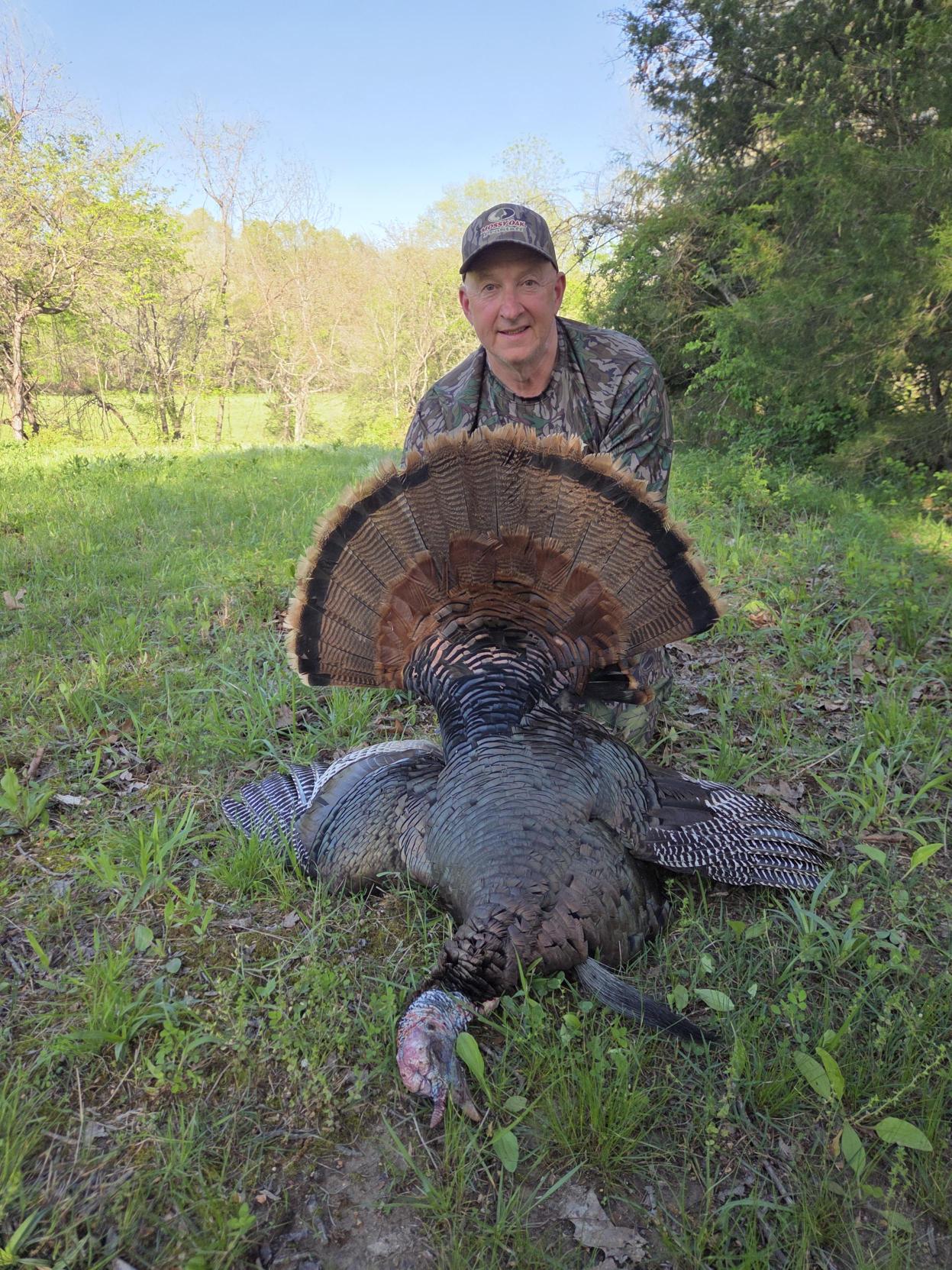
(Correction: While drafting this article, Larry capped off his 10th single-season slam with a Rio and Merriam’s in Washington state.)
Larry uses FLEX series cameras, specifically models with built-in solar panels like the FLEX-S-DARK, due to the out-of-state nature of much of his hunting. Larry resides in Guntersville, Alabama. I already know what you’re thinking—he lives on arguably the greatest bass fishery in the country and skips the spawn to chase turkeys? I thought the same thing. In short, yes. And he’s darn good at it.
While he travels the country chasing birds and adding to his totals, he’s also putting friends and clients in the middle of unforgettable hunts—like he did with me on opening day. To pattern birds and find the best locations for decoys and blind setups, he credits much of his success to preseason scouting with cellular trail cameras.
Why the FLEX-S-DARK Make Sense for Turkey Scouting
When scouting turkeys across multiple locations or out-of-state properties, having a reliable camera setup makes all the difference. Cameras like the FLEX-S-DARK are built for long-term scouting with integrated solar panels that help extend battery life and reduce the need for frequent site visits. That means less pressure on birds and more consistent intel leading up to opening day. Combined with cellular connectivity, hunters can monitor gobbler activity, track patterns, and make informed decisions without stepping foot back into the area.
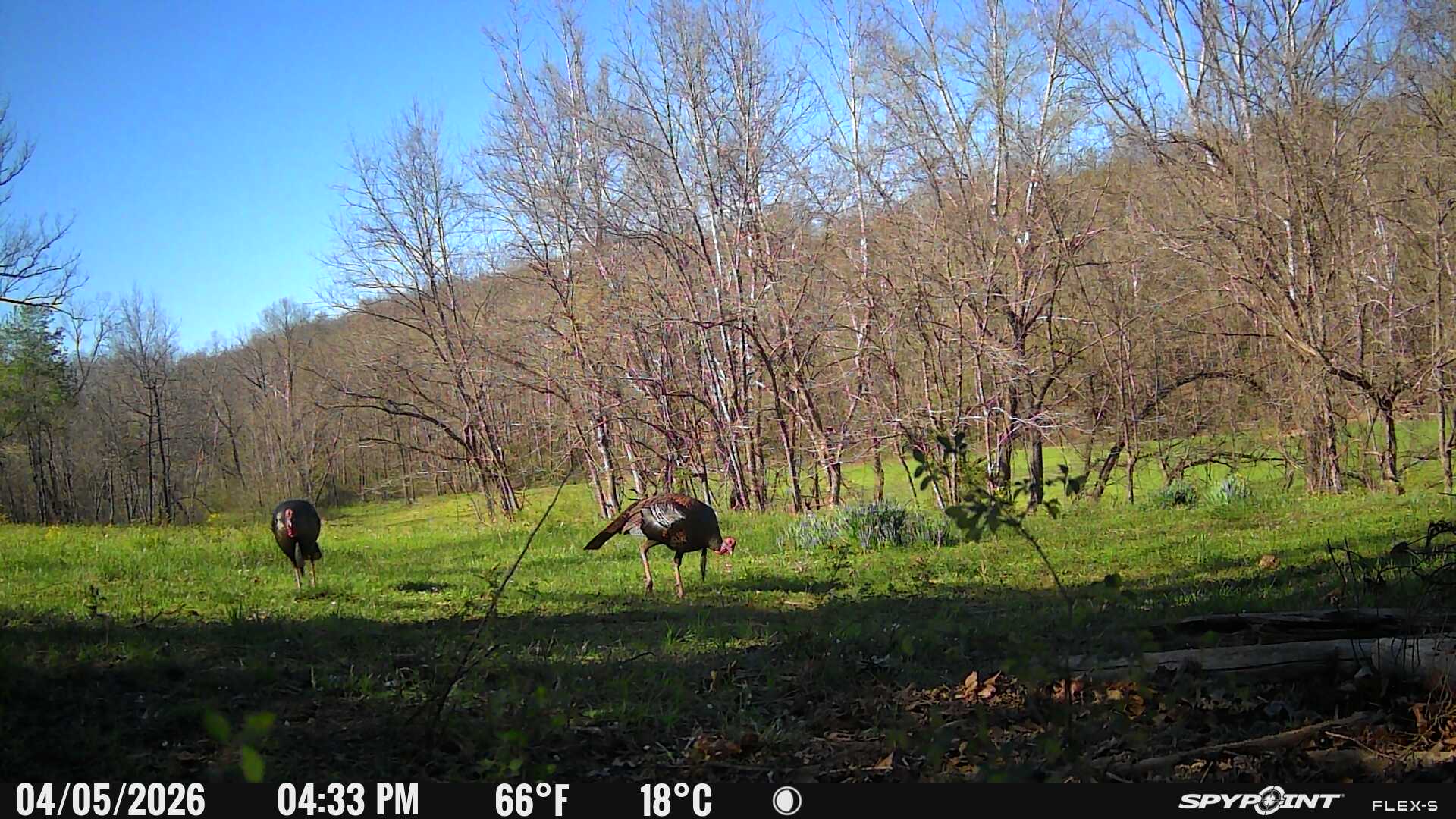
Larry had been sending me strutting and gobbling photos for weeks from one of two setups he had in Missouri. Both locations ended in successful encounters on opening day. His confidence built my anticipation as he sent messages attached to SPYPOINT photos of a particular tom, saying things like, “We just need him to do this at 7 a.m. Monday morning.”
As it turned out, the tom did exactly that—at 7:50 a.m.
So how was Larry so confident? Here’s what he found and what he did—things you can apply to your own hunts.
Daily Routines
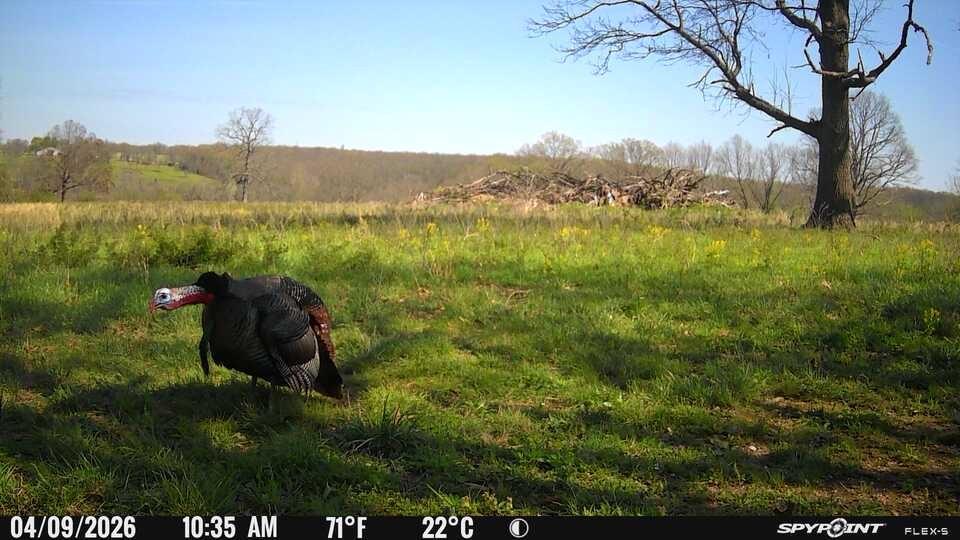
Larry identified the routes the birds used most consistently—not just where they traveled, but when. He had two cameras covering three different toms, all following similar patterns day after day.
Deciphering those daily routines, especially on a property located far from home, takes more than one or two cameras. It requires enough coverage to rule out multiple possibilities. How many cameras you need will depend on the layout of your property.
In my case, Larry had a camera positioned on a fence line that acted as a funnel from the roost to the area where a hen was nesting. The tom followed that hen on a near-daily schedule for several weeks.
For his bird, another fence line along a high field edge overlooked several potential return routes back to the roost in the evening. With the roost located in the highest back corner of the field, the birds were likely to either walk right past us or come within range if called.
That afternoon, around 4 p.m., Larry called them into the decoys using a combination of box and diaphragm calls. Natural and man-made funnels and pinch points proved to be ideal locations for camera placement once preseason patterns were established.
Field edges, fence lines, and well-used paths through the woods are all great places to start. Just remember, a turkey’s greatest defense is its eyesight. If vegetation is too thick or grass is too tall, limiting visibility, birds may avoid those areas. Turkeys prefer to travel where they can see danger at a distance.
Knowing that, when the afternoon birds approached, I stayed low in my ground chair—even sacrificing my own view—to avoid being spotted. After the morning hunt, there was no way I was going to ruin the opportunity.
Why a Cellular Camera Matters
When Larry arrived in Missouri a few days before the opener, most of the work was already done. His camera setups had already shown him when and where the birds would likely be on opening day.
He didn’t have to risk bumping birds while checking SD cards or trying to roost them at the last minute. He also didn’t have to guess how far along the birds were in pairing up.
With that remote intel, he already knew where to place the ground blind and where to position himself for the most predictable encounters. Just as important, he knew which birds were traveling together.
He knew my tom was following a single hen to her nesting area in the mornings. He also knew his bird was paired with another tom.
These details matter. They influence decoy selection and calling strategy.
In my case, the tom was likely to pass through whether we intervened or not. A single hen decoy and light calling every 15 to 20 minutes were enough to keep his attention. The hen walked within feet of the blind while the gobbler followed, sounding off repeatedly about 100 yards behind her.
For his setup, Larry used a jake decoy paired with a hen. Not knowing exactly where the birds would enter, but knowing where they were headed, he chose a setup designed to trigger a territorial response. It worked.
Both hunts ended in opening-day success.
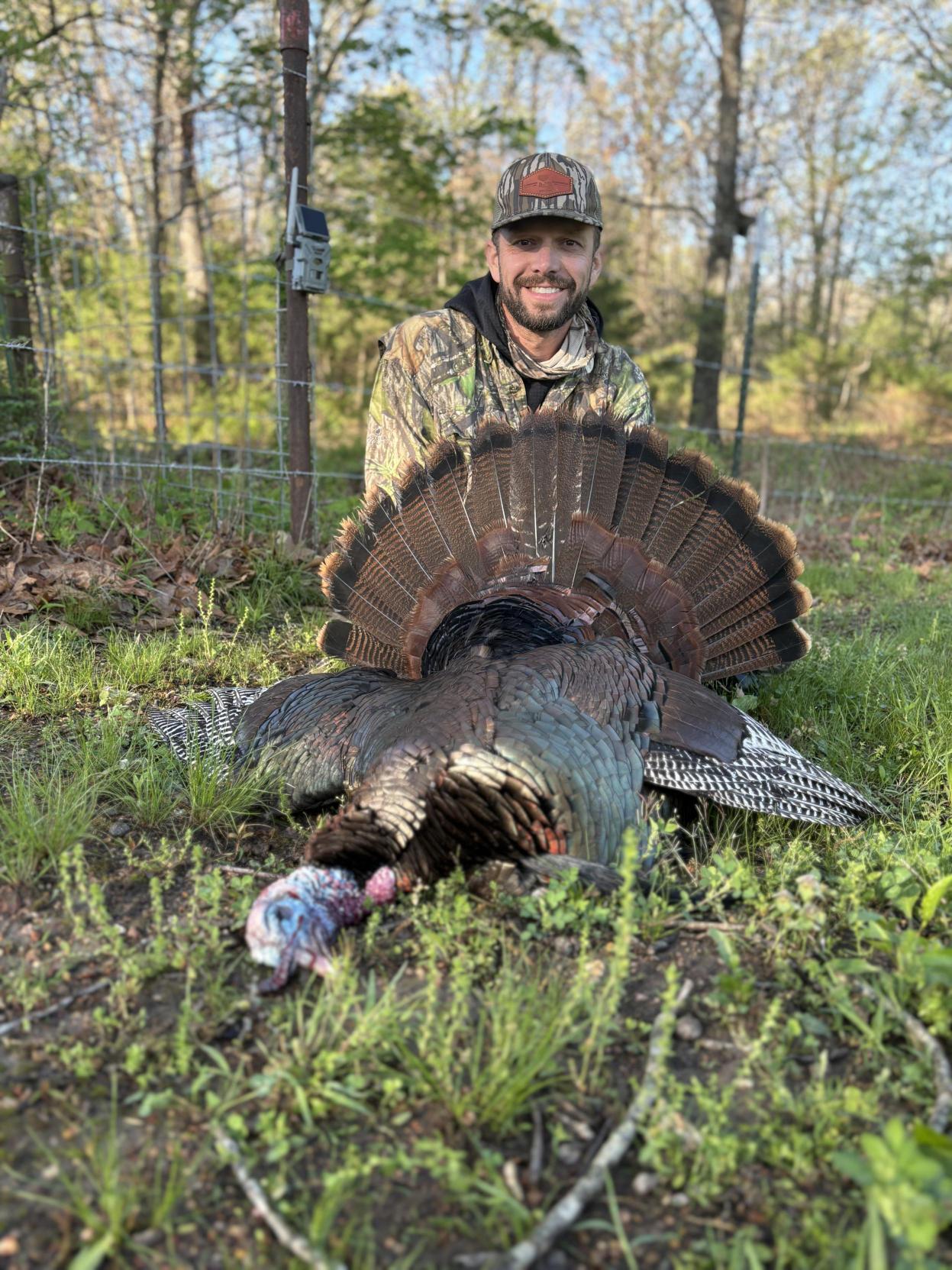
You can call it decades of experience from a world-class turkey hunter, but in Larry’s words, “Opening days especially have become a little more predictable since I started using SPYPOINT cameras. From retrieving photos and videos remotely to not having to worry about batteries, these cell cams with integrated solar panels have become a vital tool in my success.”