Running trail cameras over a bear bait site isn’t just about getting exciting photos. It’s one of the most effective ways of judging black bear size before the season opens. A well-placed camera can help you estimate a bear’s size, age class, and behavior patterns, giving you the confidence to make the right call when the moment of truth arrives.
Before using bait sites for scouting or hunting bears, always check your local hunting regulations. Laws regarding baiting vary by state, province, and hunting unit, and it’s important to ensure your setup complies with all local wildlife management rules.
While black bears can be notoriously difficult to judge in person, using trail cameras for bear hunting adds consistency and reference points that make the process far more accurate.
Use the Barrel as a Measuring Stick
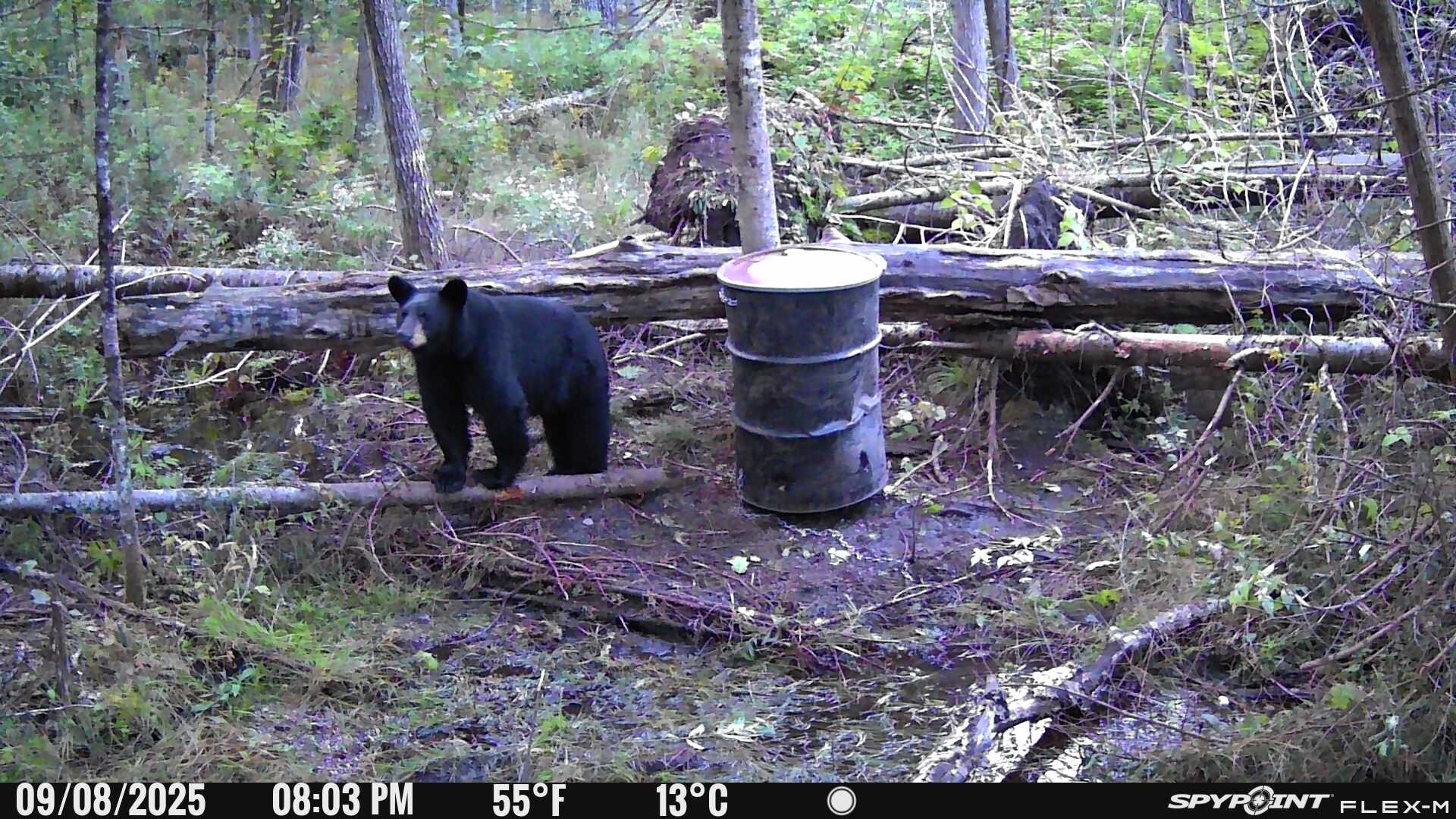
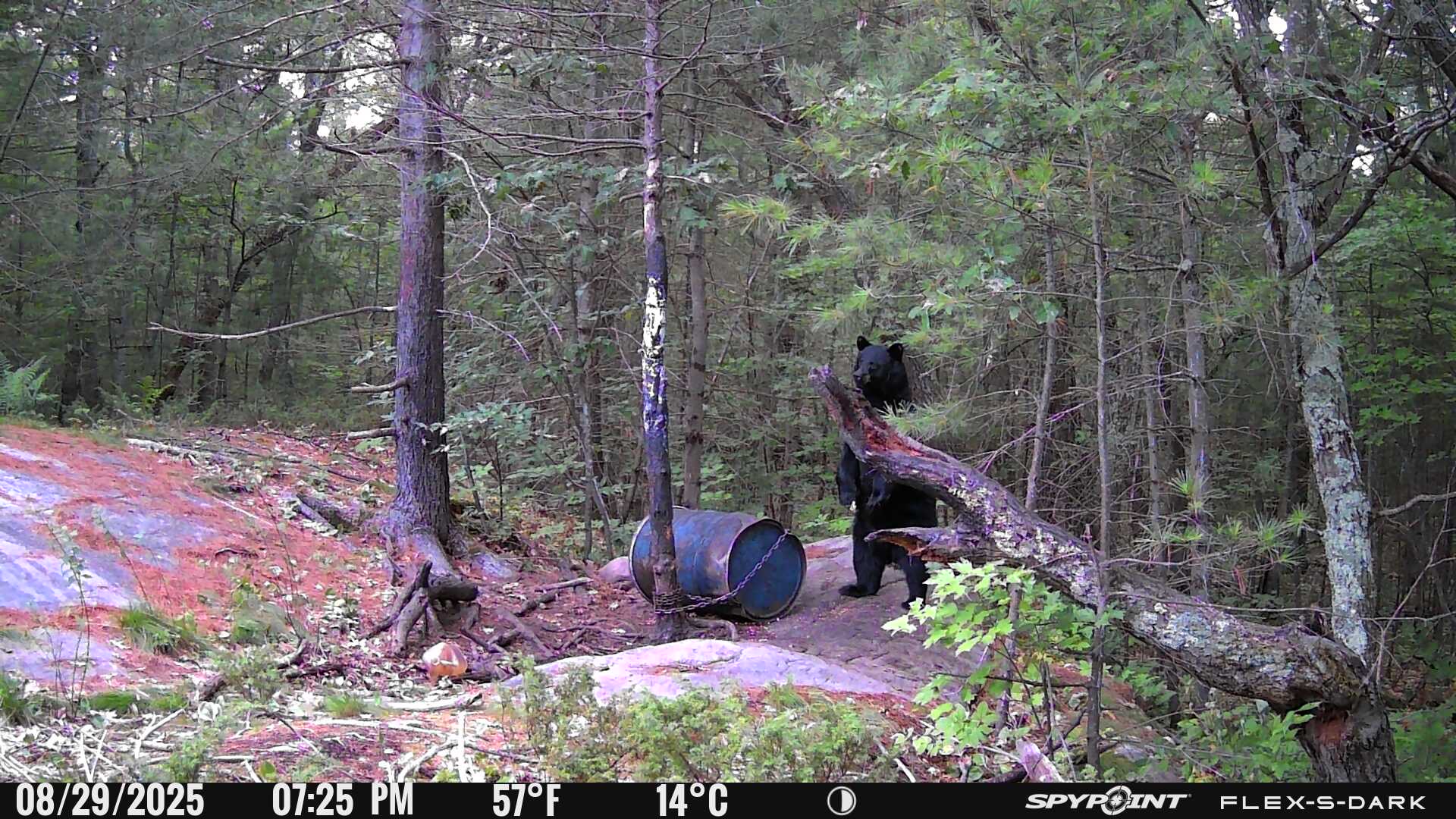
One of the easiest ways to judge bear size at a bait site is to use the bait barrel as a consistent reference point. Since most barrels are a standard height, they create a built-in measuring tool for every bear that visits.
When a bear stands beside the barrel, pay attention to where its back and shoulders line up.
A smaller or younger bear may only come halfway up the barrel, while a mature bear will often have its back near or over the top. A truly large bear will look like it could not fit in the barrel with the lid on. Using trail camera photos to compare multiple visits gives you a clearer picture of overall body growth and development.
Mark Trees for Better Comparison
Another excellent trick for judging black bear size is using visual markers on nearby trees. By placing a strip of tape, a tack, or a clearly visible mark at a known height, you can compare bears from one visit to the next. This is especially useful if the barrel gets moved or tipped.
A good method is to mark 3 feet, 4 feet, and 5 feet on a tree close to the bait. When a bear stands up to sniff or rub, you can see how high its head, shoulders, or back reaches. Over time, reviewing trail camera images from your bear bait site will quickly reveal which bears are average, which are younger, and which ones are worth waiting for.
Set Cameras for Side Views
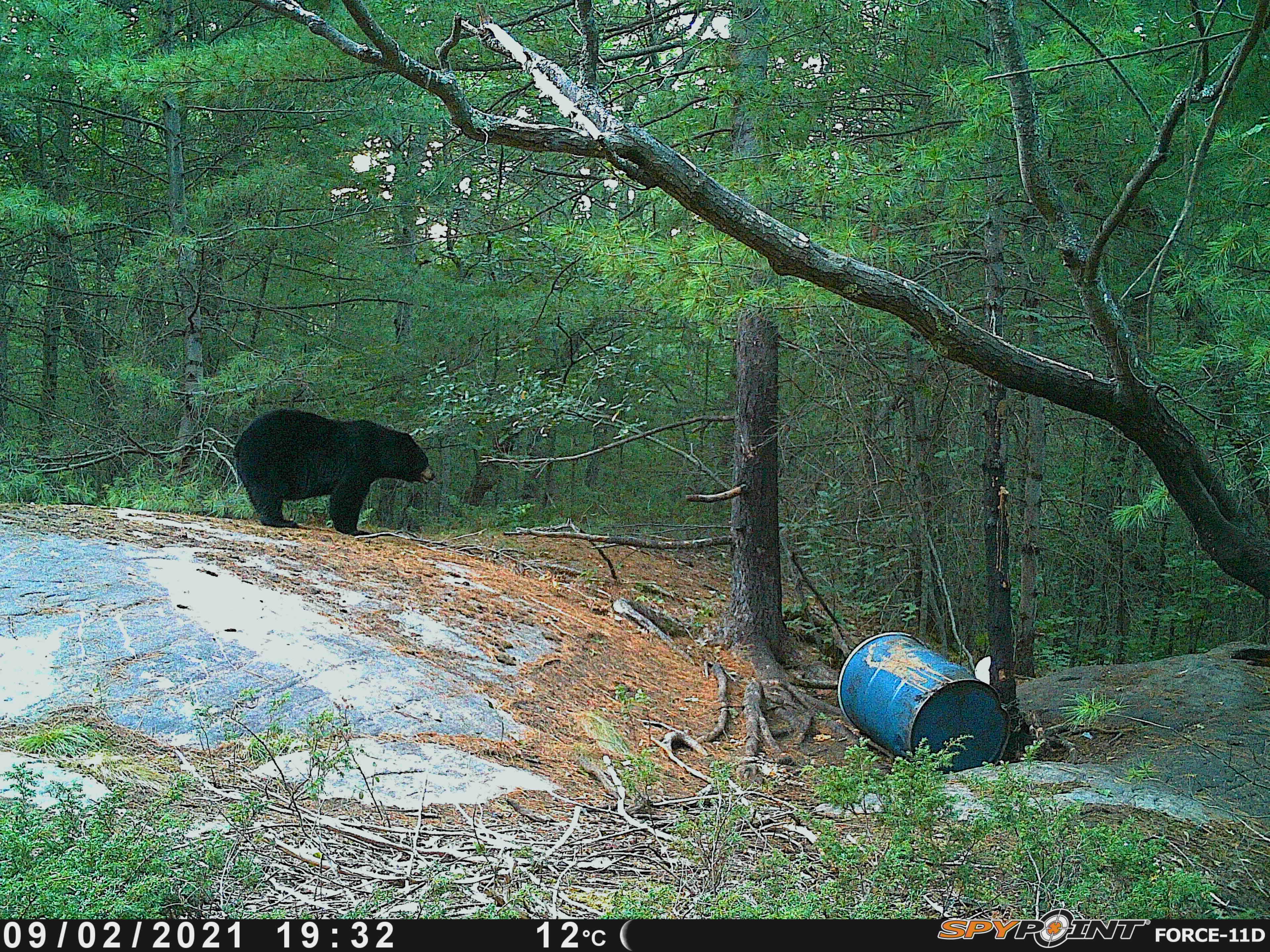
One of the biggest mistakes hunters make when placing bear bait trail cameras is positioning them too close or at the wrong angle. A straight-on view can be misleading, making even a medium-sized bear look huge. Instead, aim for a broadside or side view whenever possible.
A side profile clearly shows body structure, which is one of the best age indicators. In side photos, you can evaluate belly sag, leg length, shoulder mass, and the overall blockiness of the bear.
Place your camera 10 to 15 yards away and slightly off to the side of the bait so bears naturally walk past it. This creates more consistent comparison photos instead of random head-on snapshots and improves your ability to judge black bear age class accurately.
Look for Age Clues in Body Shape
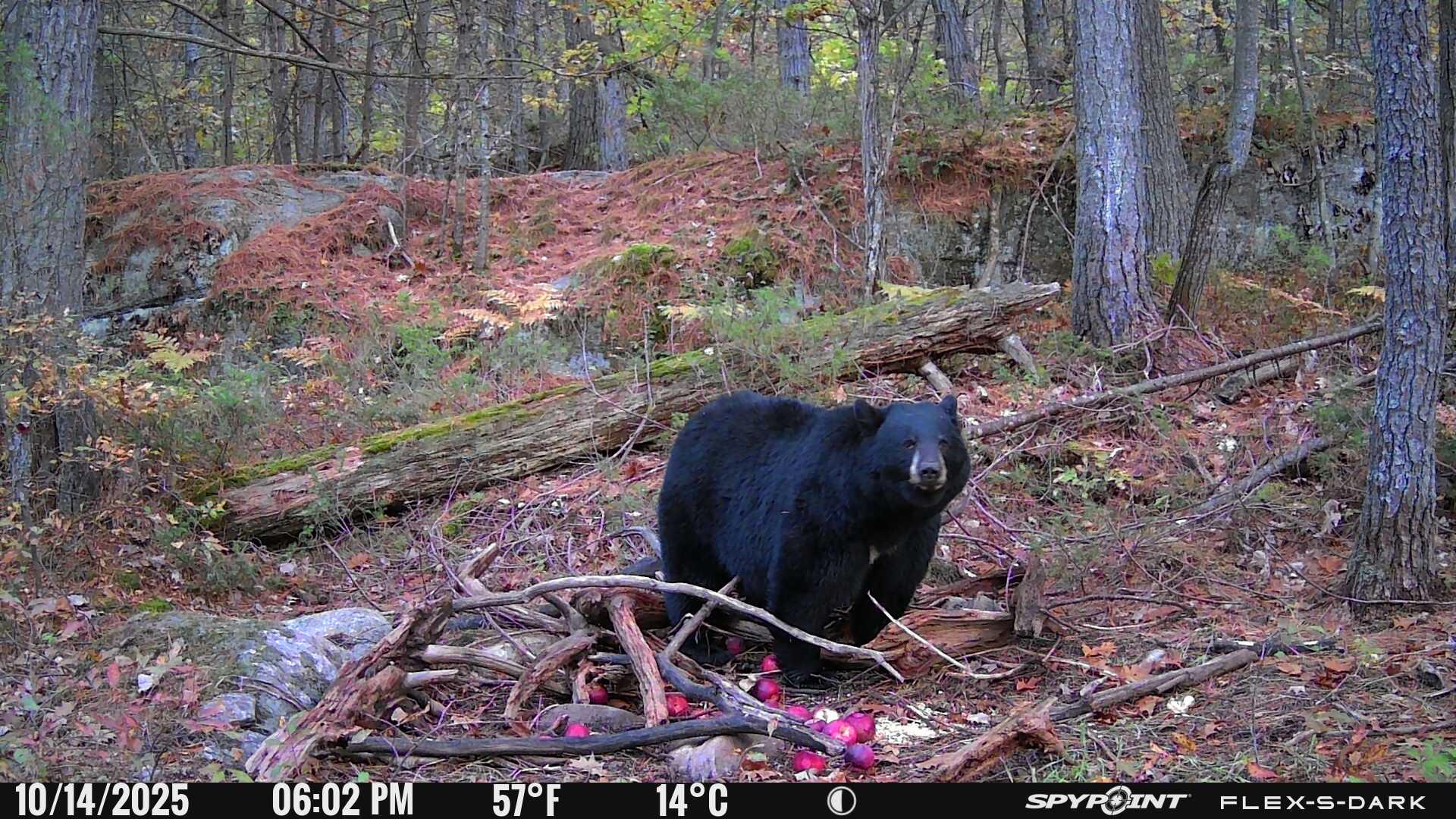
Size matters, but shape matters even more when judging black bears.
Young bears typically have a slimmer look with long legs and a narrow chest. Their bellies will be tucked up, and their heads may look large compared to their body.
Mature bears, especially older boars, look thick and heavy. Their bellies often hang low, their legs look short, and their shoulders appear muscular and wide. Older boars may also have a blocky head with a thick neck that blends into the shoulders, giving them a powerful, bulldog-like appearance.
If a bear looks built low and wide, with its belly close to the ground, it’s usually an older animal.
Pay Attention to Ears and Face
A quick but reliable trick when reviewing trail camera photos is to watch the ears.
On younger bears, the ears appear tall and prominent because the head is still relatively narrow. On mature bears, the head becomes wider, and the ears look smaller and farther apart.
A big boar often has a broad muzzle and a thick, square face. Sows may appear more slender in the head, with a longer, more tapered snout. These facial features can help confirm what body structure is already suggesting.
Use Video Mode for Better Judging
Still photos can be deceptive depending on the angle and posture. Using video mode on cellular trail cameras often provides a much better sense of how a bear carries itself.
A mature bear tends to move with a slow, heavy swagger. The shoulders roll, the belly swings, and the animal looks powerful even when it’s not standing perfectly broadside. Video footage from a bear bait site can reveal subtle differences in size and dominance that still images sometimes miss.
Track Behavior and Timing
Trail cameras help you judge more than just size.
Large bears often move later in the evening or under full darkness, especially if other bears are active. If one bear consistently shows up after midnight while smaller bears arrive earlier, that can be a sign you’re dealing with a dominant animal.
Monitoring timing patterns through cellular trail cameras allows you to build a more complete scouting picture before opening day.
Why the FLEX-S-DARK Is Ideal for Bear Bait Sites
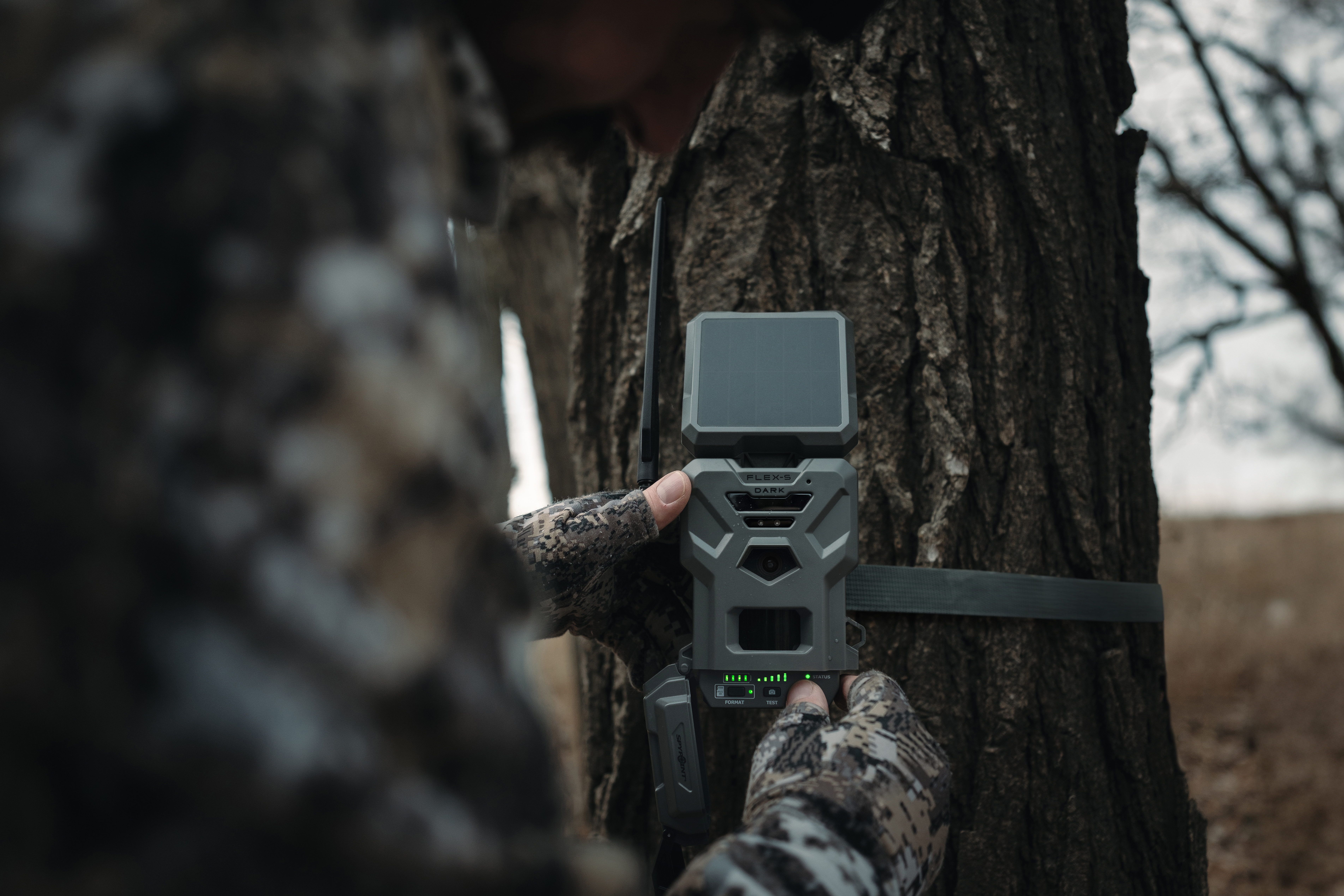
Cameras positioned over bait sites need to perform in low light and remote locations. The SPYPOINT FLEX-S-DARK is a strong option thanks to its solar-powered design, no-glow LEDs, and reliable cellular connectivity. Its video mode provides clear footage that helps hunters evaluate movement, posture, and body structure, making it easier to judge a bear’s age and size before the season begins. With remote access through the SPYPOINT app, hunters can monitor activity without disturbing the bait site.
Final Thoughts
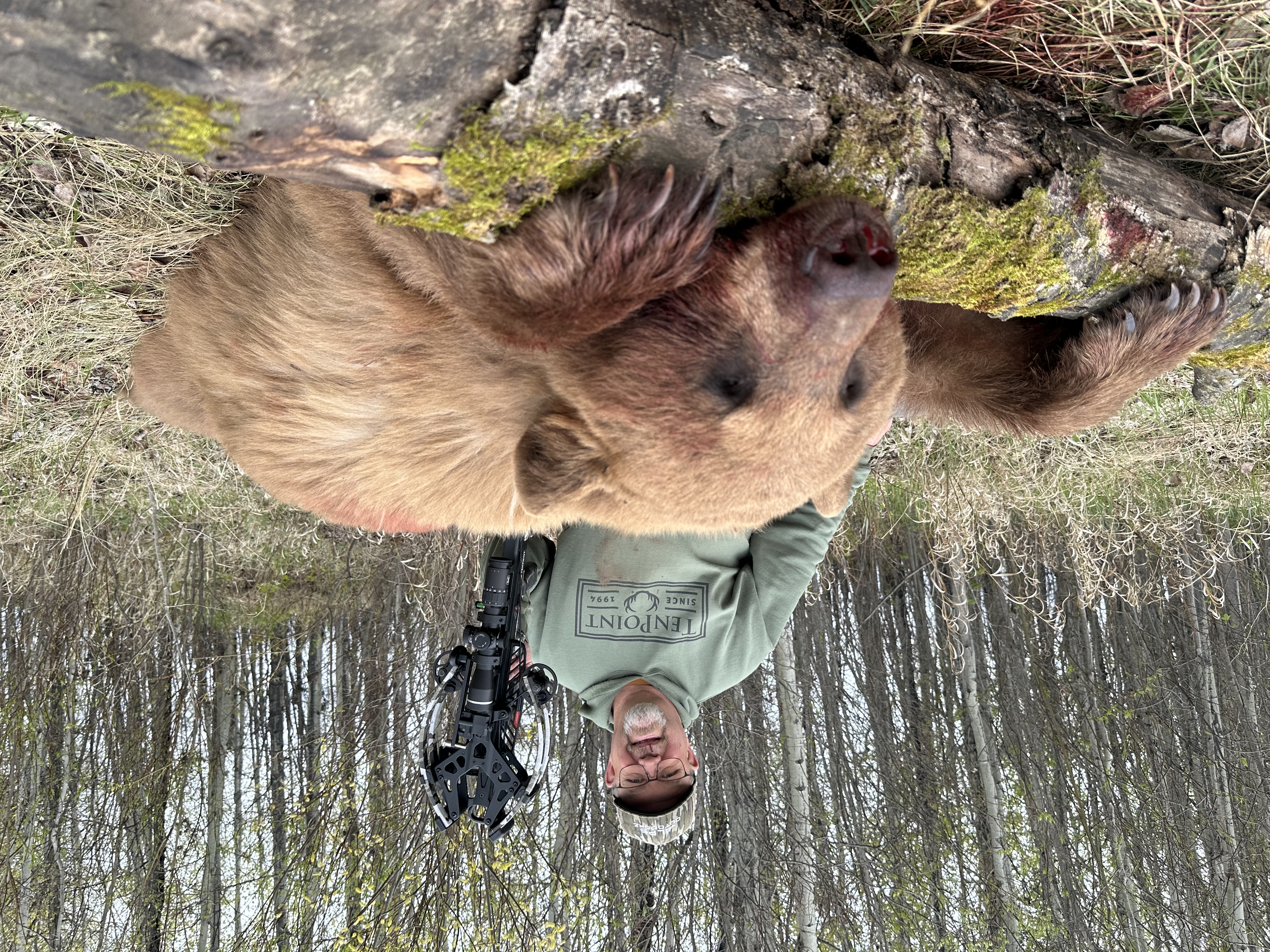
Judging black bears at a bait site is part science and part experience, but trail cameras make it far easier.
Using the barrel height as a reference, adding tree markers, and positioning cameras for broadside shots will give you the best possible look at a bear’s true size and age. Combine body structure, head shape, ear size, movement patterns, and timing data, and you’ll have the confidence to hold out for the bear you really want.
Smart scouting with trail cameras for bear hunting can make all the difference when season finally opens.
By Brad Fenson