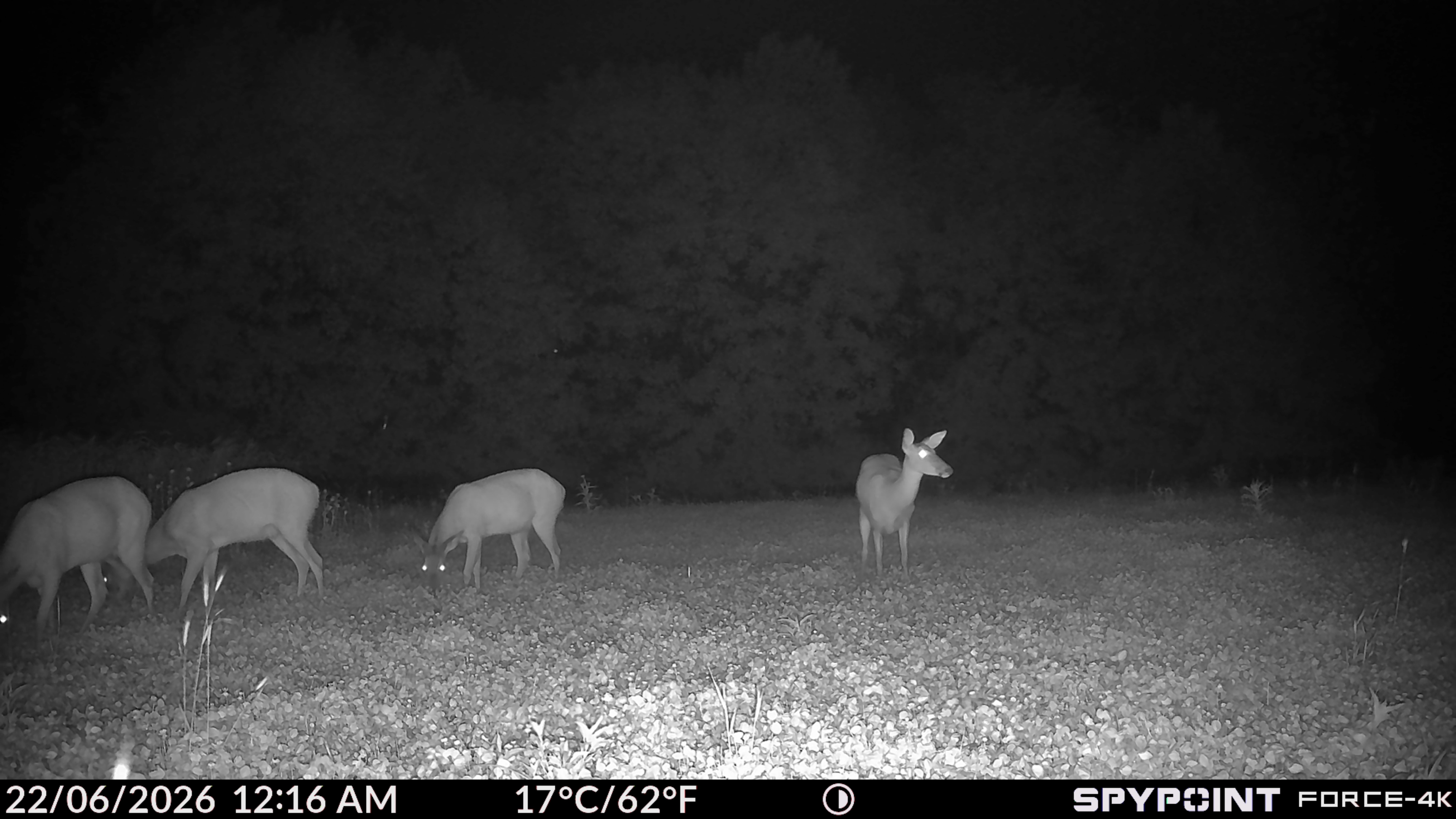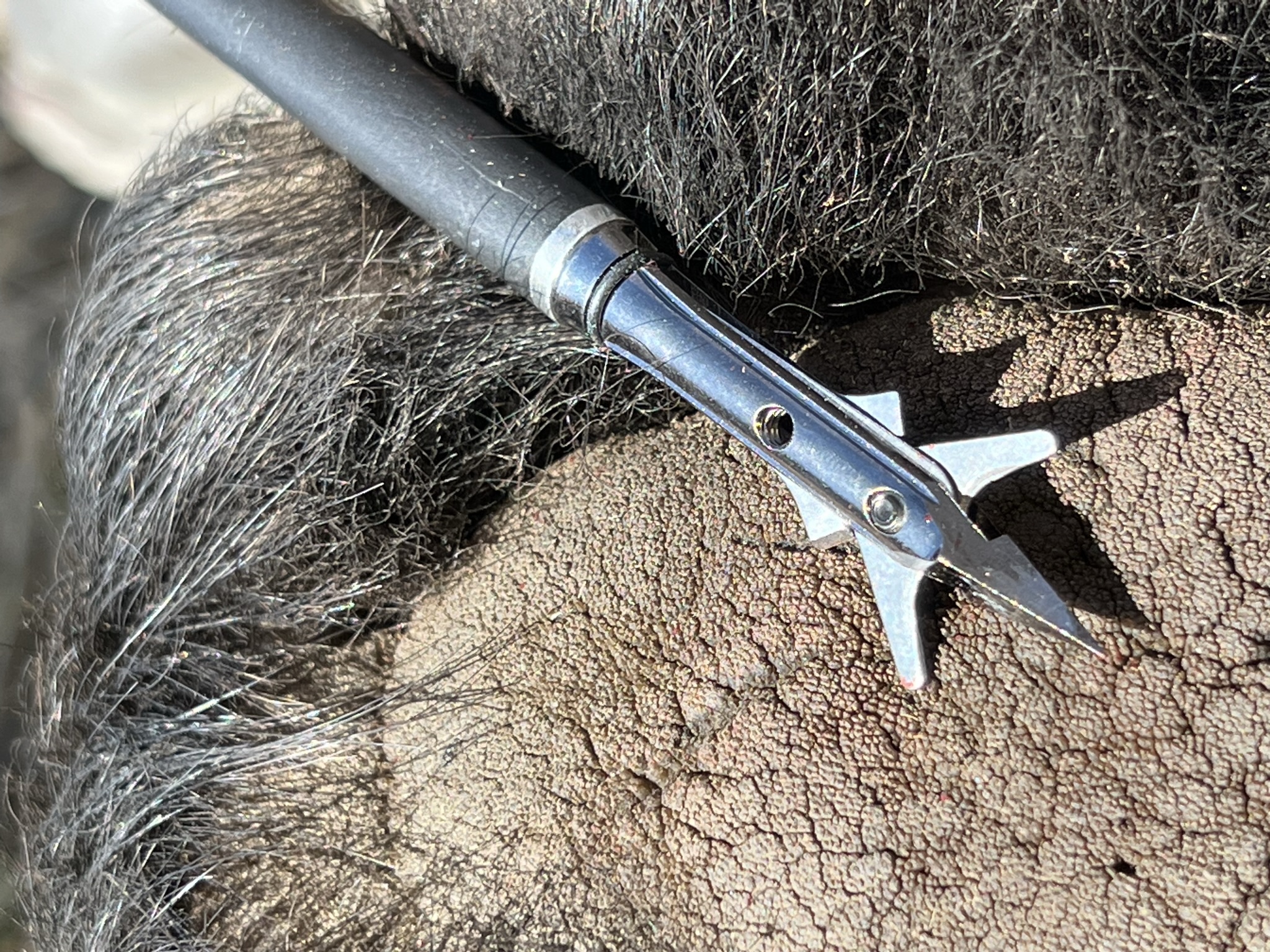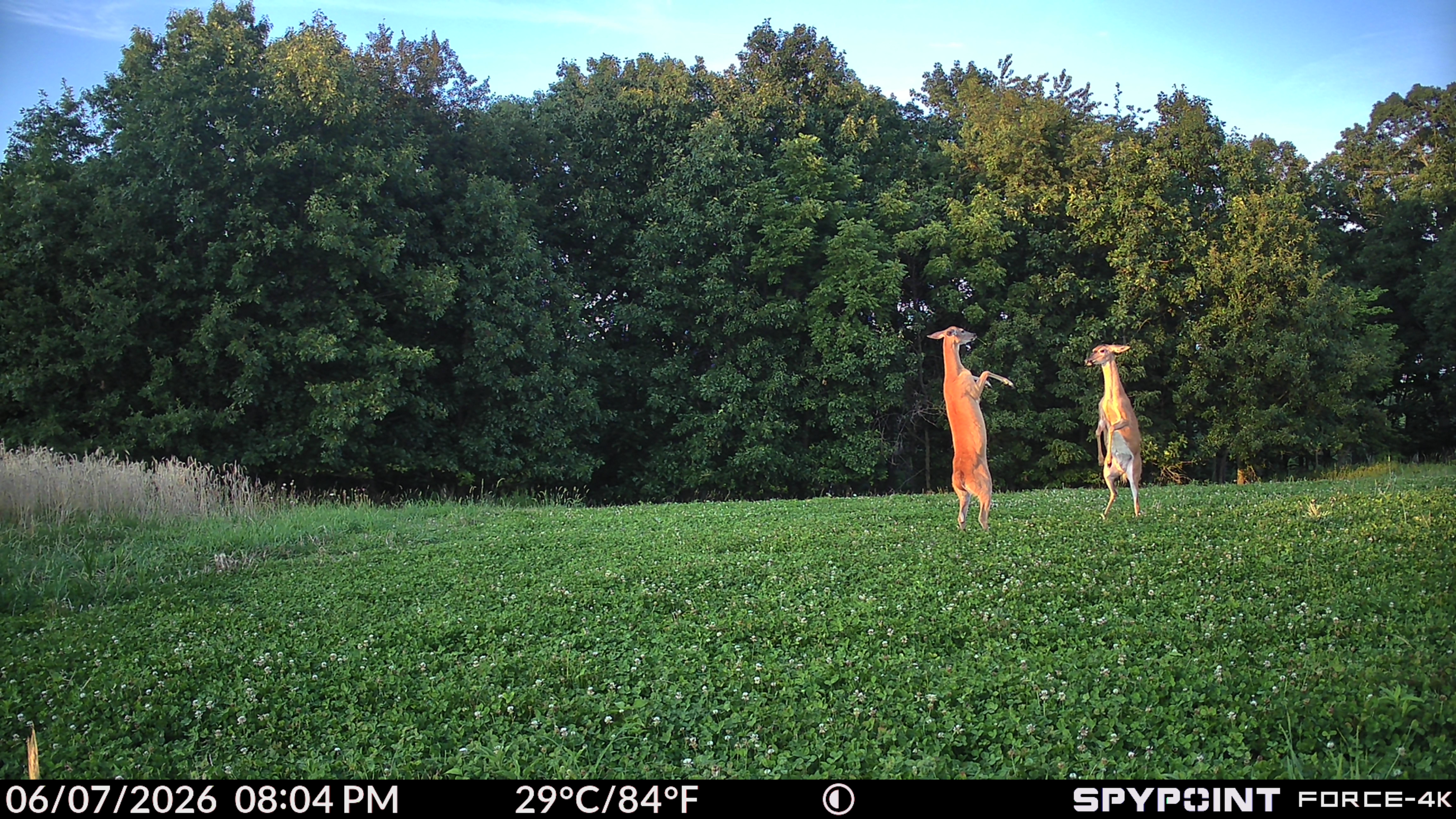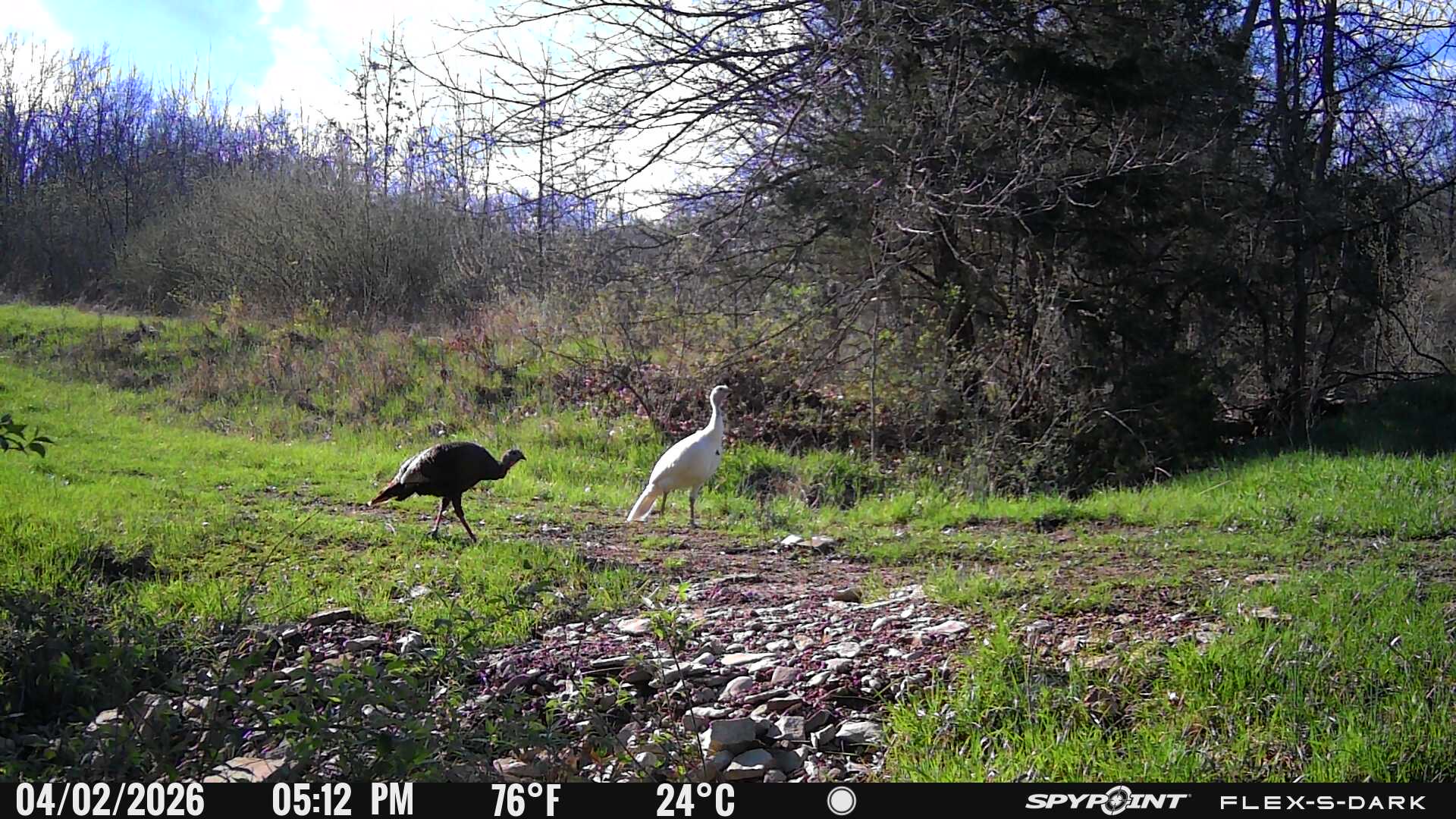
Spring can be a great time to scout for fall. Managing land for wildlife means attracting animals year-round so they come to feel at home there. Spring is one of the best times to see what’s happening on the landscape. Grasses are short, food plots haven’t grown tall yet, and animals are under less pressure.
Many species are also in “show-off” mode during the breeding season, which means they’re more likely to be active during daylight hours. It’s an opportunity you don’t want to miss when it comes to learning what’s using your property.
Deer
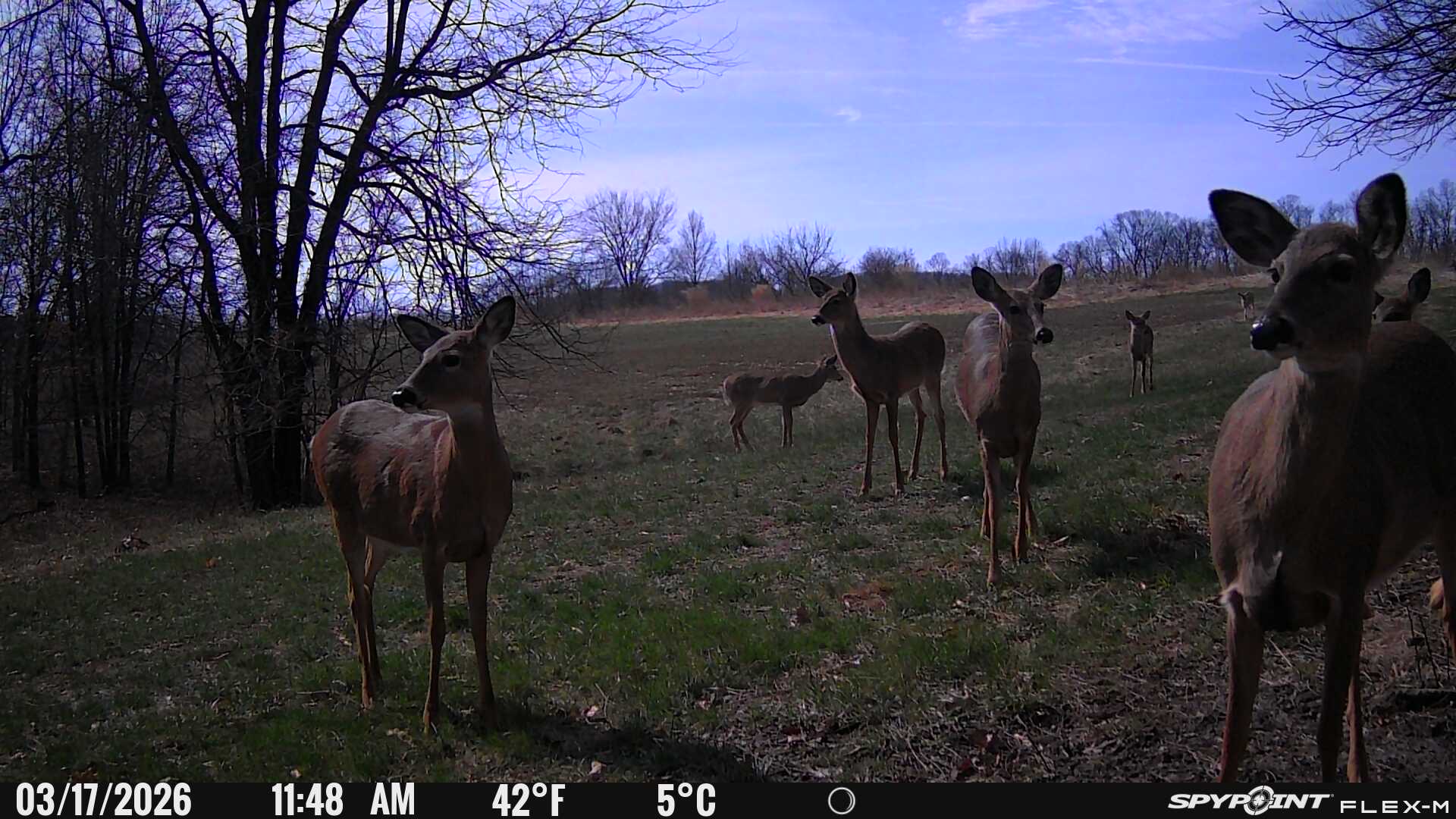
Even though bucks have dropped their antlers, does and fawns will regularly show themselves during the day. And where there are does, there will be bucks in the fall. Seeing these deer also helps you get a handle on population levels and how severe the winter may have been.
I place cameras on well-known trails, food plots, and near stands. Some cameras remain in their fall locations, while others get repositioned around food plots. The open spring landscape allows deer to roam more freely, and they don’t always stick to traditional trails.
I like running multiple cameras around food plots to get a wider look before crops grow. Deer can easily avoid their usual entry and exit points this time of year, so covering more ground helps.
I use 15-second HD video settings because I utilize my footage for TV shows and YouTube. Stills are a great option for saving battery life while still showing what’s out there. I start with medium sensitivity and adjust it through the SPYPOINT app based on wind conditions. As vegetation grows, I either move cameras or lower sensitivity to reduce false triggers.
I use low-resolution previews to quickly check activity. If I see something worth saving, I request the full HD video through the app. This helps me avoid entering the area and disturbing deer. I also rely on SPYPOINT solar panels and solar cameras to extend runtime and limit visits. Otherwise, I wait until batteries need replacing before swapping cards.
Why the FLEX-S-DARK Fits Spring Scouting
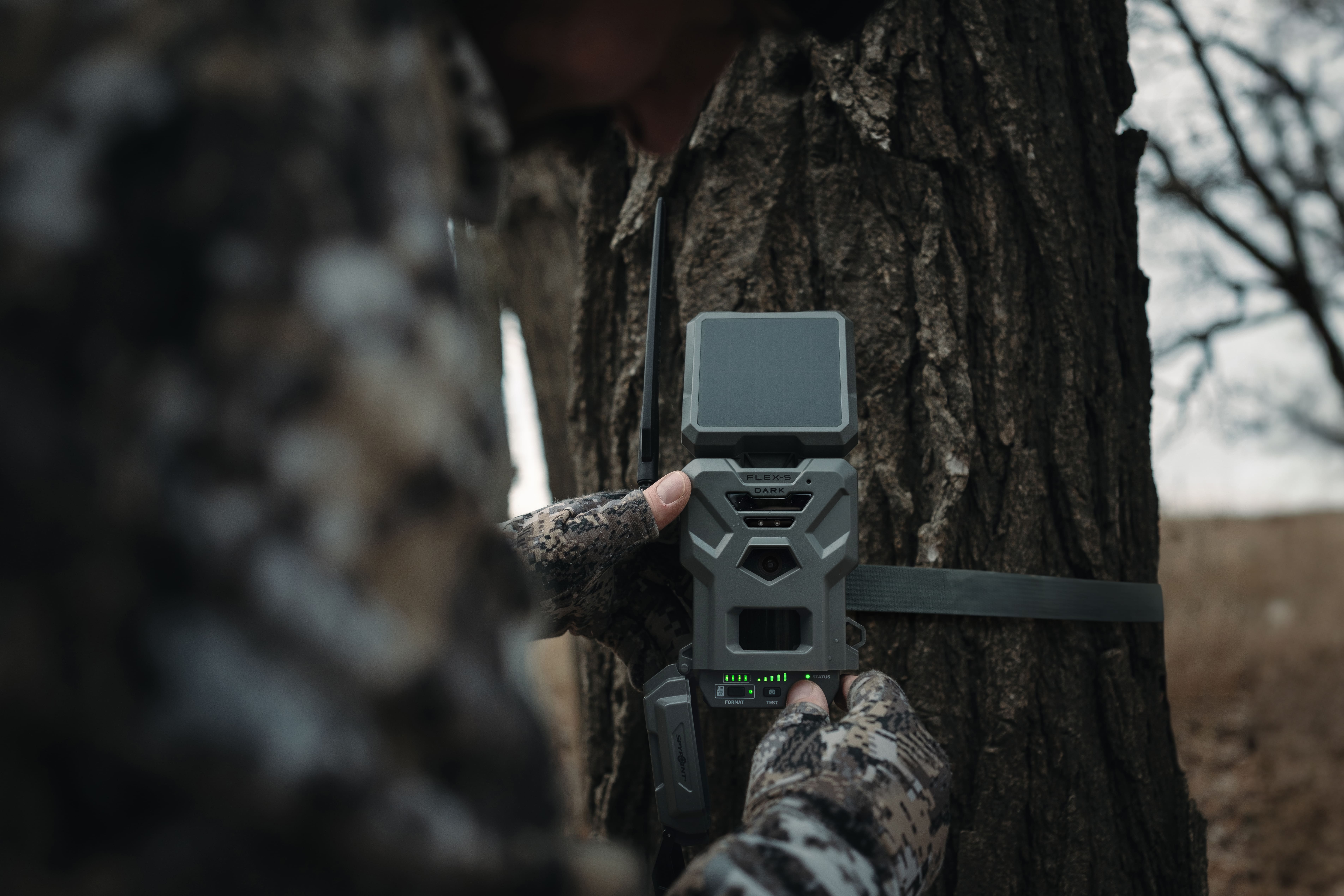
When it comes to running cameras in the spring, minimizing disturbance is everything. The SPYPOINT FLEX-S-DARK is a strong option because its integrated solar panel helps keep the camera running longer without frequent trips into the area.
Its no-glow LEDs are ideal for capturing wildlife without drawing attention, especially in areas where deer or turkeys may already be cautious after the season. Paired with on-demand photo capability and reliable cellular performance, it allows you to monitor activity, check framing, and adjust settings without stepping foot back into the property.
That combination makes it easier to gather consistent intel through the entire spring without impacting animal behavior.
Turkeys
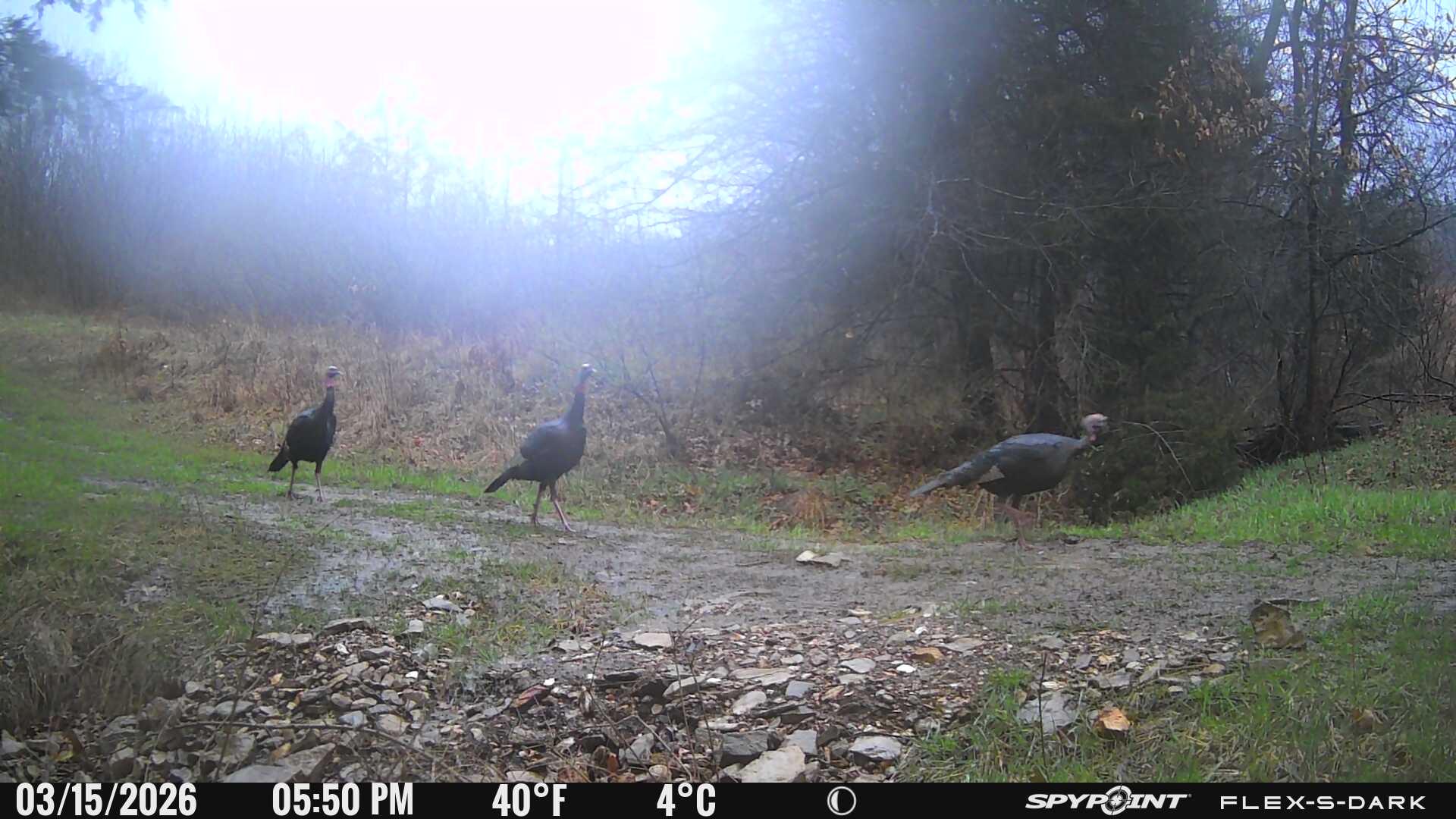
I use a similar approach for spring turkey scouting as I do for fall deer hunting. I place cameras on known trails, field edges, and areas where I’ve spotted birds while scouting.
Turkeys can be patterned, but not as easily as deer. If they have large areas to roam, like long riparian corridors, I’ll run a bank of cameras to see which areas they prefer most. This helps me get a count of toms and jakes and use that information when calling birds.
I also set cameras overlooking large fields or meadows. This gives a broader view in case birds don’t walk directly in front of the camera. Always consider sun direction to avoid washed-out images. Positioning cameras with the sun behind them in the morning or facing north can help maximize image quality.
One trick I’ve incorporated is creating a hidden access route to my stand or camera. If there’s a narrow grove or cover, you can move in and out without being seen. Both deer and turkeys are quick to pick up on movement, so I try to stay as stealthy as possible when checking cameras.
Upland Birds
I’m fortunate to live in pheasant country, and some of my favorite trail camera footage has come from crowing roosters, dust-bathing hens, or birds sparring.
Trail cameras help me gauge local hen and rooster populations and learn more about their habitat preferences. I also use this information when planning food plot plantings.
Learning More from Spring Activity
I love to hunt, but I also enjoy learning about the animals I’m hunting. Seeing wildlife in the spring is just as exciting as seeing them in the fall.
Trail cameras capture behaviors you might never see otherwise. They also help me determine where to set up for photography and what time I should plan to be out there. One of my favorite finds has been a “hooster,” technically called a gynandromorph, showing both male and female characteristics.
Spring in the Outdoors
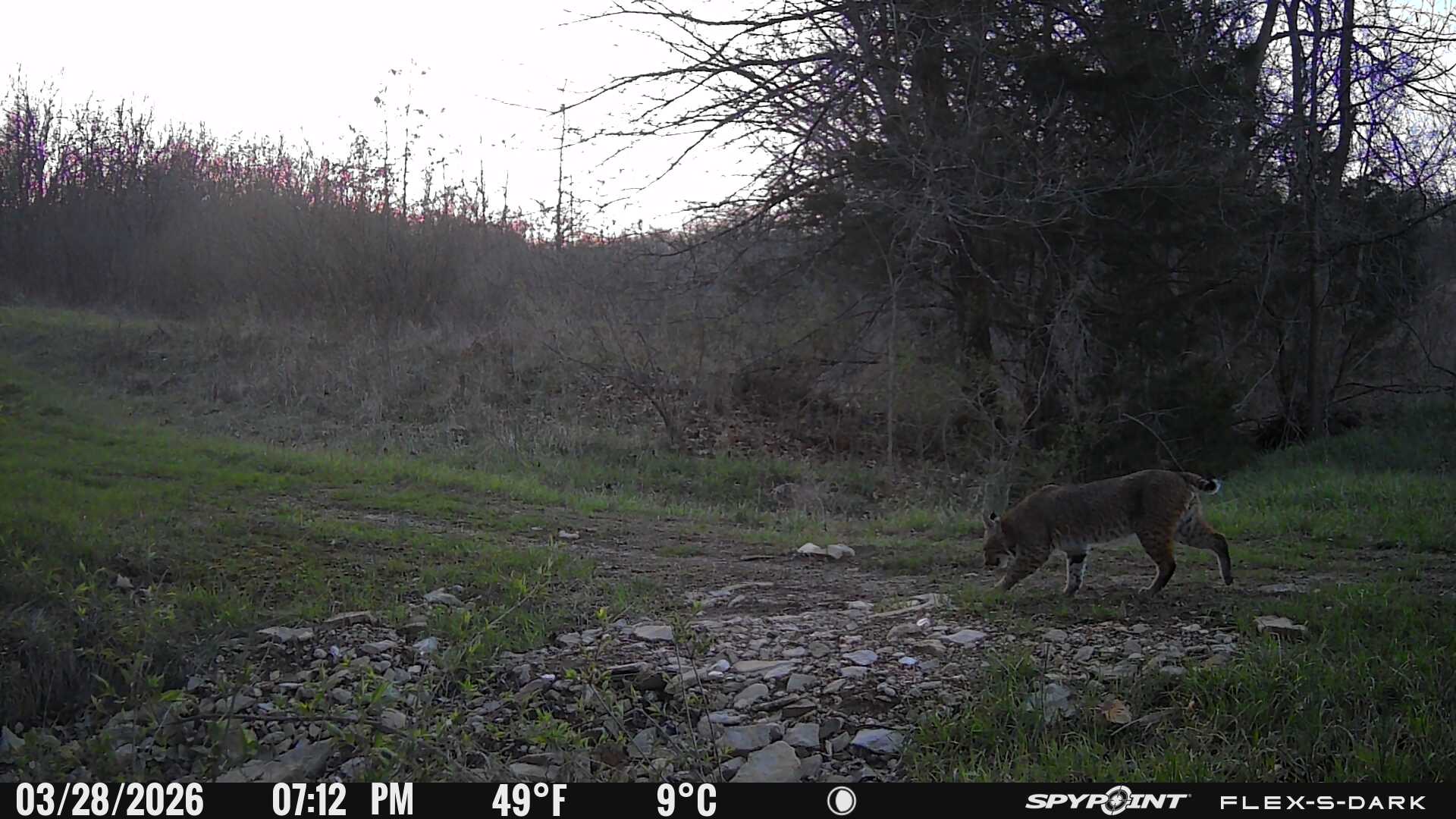
Using trail cameras in the spring is one of the best ways to learn about the wildlife on your property.
I rarely see turkeys on my property during the year, but each spring I’ll catch a wandering hen or two on camera looking for a nesting spot. It gives me hope that eventually a tom will follow. Without trail cameras, I’d never know they were there.
I simply enjoy watching wildlife. Seeing different species go through their spring rituals makes me excited to check the app each day.
In a lot of ways, it feels just like deer season all over again.
By Bret Amundson